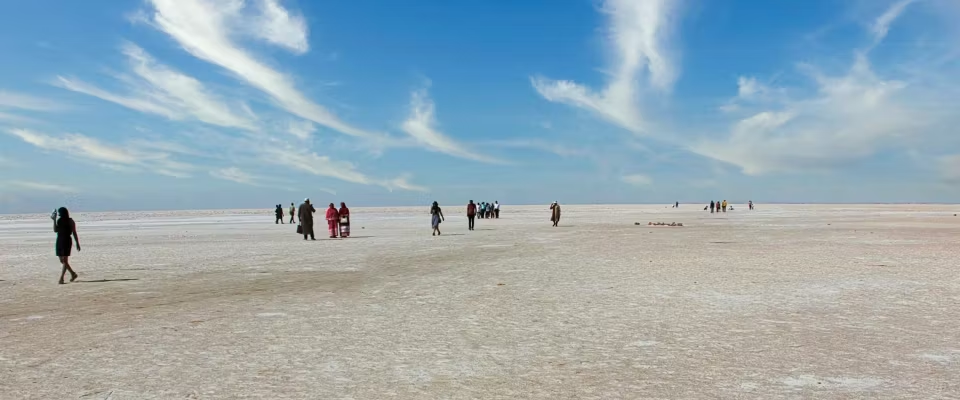
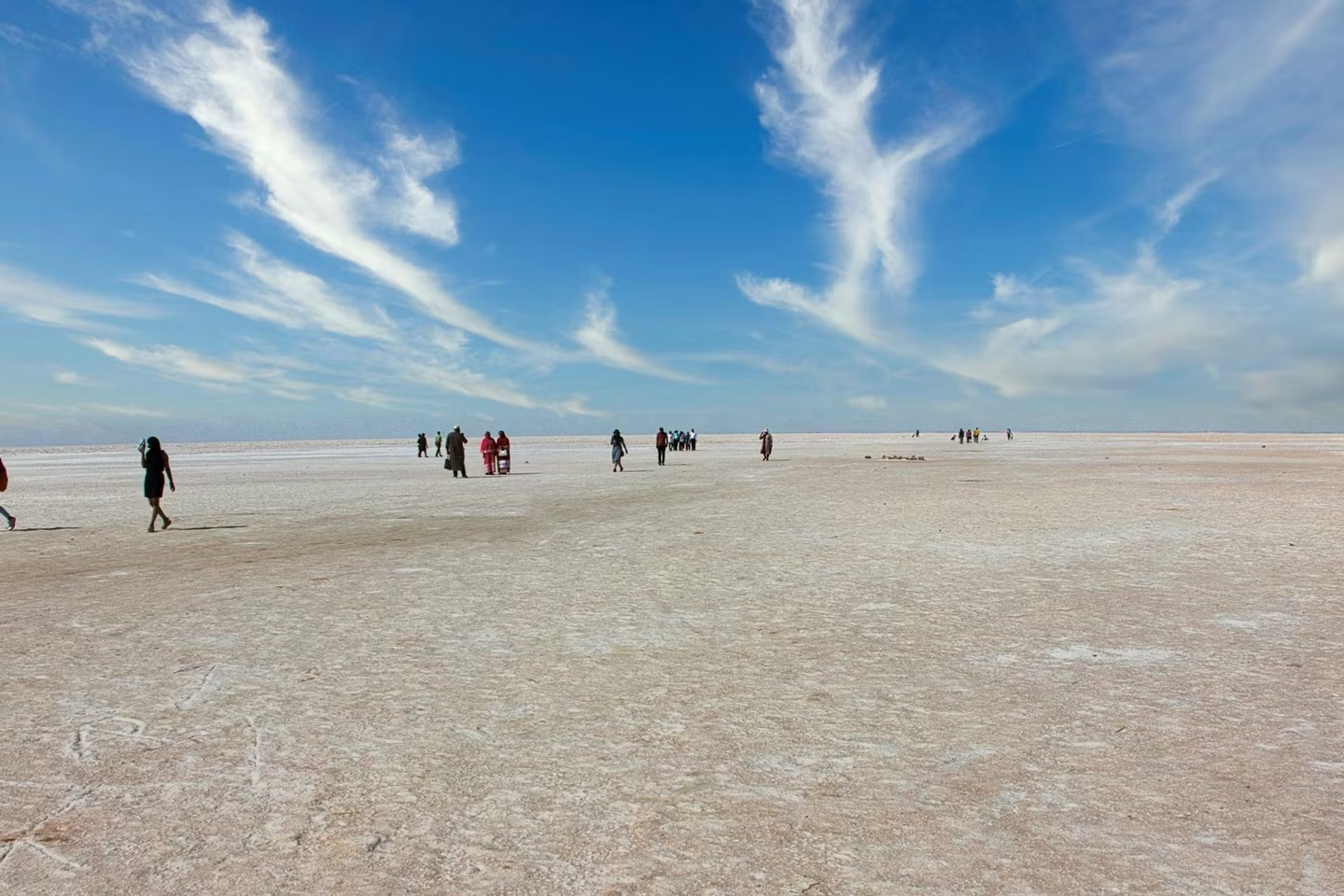
The Rann of Kutch is known for its white salt desert, its full-moon nights and the embroidery villages that ring it. From October to February the Great Rann dries into a crust that runs flat to the Pakistan border, and Dhordo's Rann Utsav tent city, 85 km from Bhuj, fills with camel carts, folk music and tourists waiting for moonrise. Around it are Kala Dungar, the Black Hill with the only view over the whole expanse, the craft villages of Hodka, Nirona and Ajrakhpur, the Harappan city of Dholavira on Khadir island and Mandvi's beach and shipyards on the coast. A Rann of Kutch trip needs three days and a full moon; Bhuj's Aina Mahal and Prag Mahal are the base. Picture a white horizon, a copper bell from Nirona and a moon rising over salt.
Places to Visit in Rann of Kutch
- Dhordo and the White Rann: The last village before the salt, 85 km from Bhuj, with the Rann Utsav tent city from November to February and the viewing deck where the white desert begins. Full-moon nights are booked out months ahead.
- Bhuj: Kutch's capital and the base for everything, with the 18th-century Aina Mahal and its hall of mirrors, the Prag Mahal's Gothic clock tower, the Kutch Museum and the Bhujodi weaving village 8 km out. Bhuj has an airport.
- Kala Dungar: The Black Hill, 95 km from Bhuj, the highest point in Kutch at 462 m, with a 400-year-old Dattatreya temple and the only panoramic view over the Great Rann to the border. Jackals are fed at the temple at sunset.
- Dholavira: A UNESCO-listed Harappan city on Khadir island in the Great Rann, 220 km from Bhuj, with 4,500-year-old reservoirs, a signboard in Indus script and the Road to Heaven causeway across the salt to reach it.
- Craft Villages: Nirona for rogan painting and copper bells, Ajrakhpur for Ajrakh block printing, Hodka and Bhirandiyara for Banni embroidery and mud bhungas, Bhujodi for weaving; all within 60 km of Bhuj.
- Mandvi: The coast 60 km from Bhuj, with the Vijay Vilas palace used in Bollywood films, a 400-year-old shipbuilding yard still making wooden dhows and a windmill-lined beach. Pair it with the Rann for a desert-and-sea loop.
Top Experiences
- See the White Rann by Full Moon: The salt flat glows under moonlight; time your visit to the full moon between November and February, book Dhordo permits at the Bhirandiyara checkpost and stay after the Utsav crowds leave at 9 pm.
- Attend Rann Utsav: The tent city at Dhordo runs November to February with folk music, camel-cart rides, craft stalls and Kutchi food; day passes are available if you stay in a village bhunga instead.
- Do a Craft Trail: Spend a day driving Bhujodi, Ajrakhpur and Nirona, watching rogan artists paint with castor-oil pigment and bell-makers tune copper by hand; buy direct from the families.
- Spot Wild Ass in the Little Rann: The Indian wild ass sanctuary near Dasada, 300 km east of Bhuj, runs jeep safaris for the last wild population of khur, plus flamingos and pelicans in winter; October to March.
- Drive the Road to Heaven: The 30-km causeway from Khavda to Dholavira runs across the salt with white on both sides; go at sunrise or sunset between November and March, and visit the Harappan site before the heat.
Where to Eat
- Jalaram Bhojanalaya, Bhuj: The city's traditional Gujarati thali house, with unlimited rotla, kadhi, dal and seasonal vegetables served fast. Cost for two: ~400 INR
- Hotel Noorani Mahal, Bhuj: A long-standing Bhuj restaurant for Kutchi and Mughlai non-vegetarian cooking, mutton and chicken curries with rotis. Cost for two: ~600 INR
- Sankalp Restaurant, Bhuj: The reliable vegetarian stop for South Indian, Punjabi and Chinese plates, popular with families. Cost for two: ~600 INR
- Umiya South Indian, Bhuj: A simple dosa and idli counter that Bhuj locals swear by for breakfast. Cost for two: ~250 INR