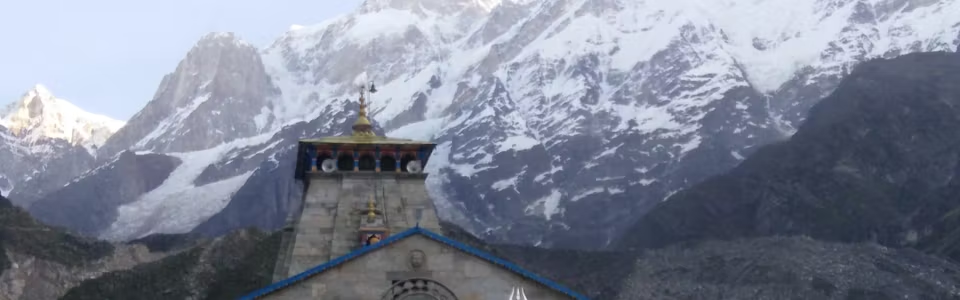
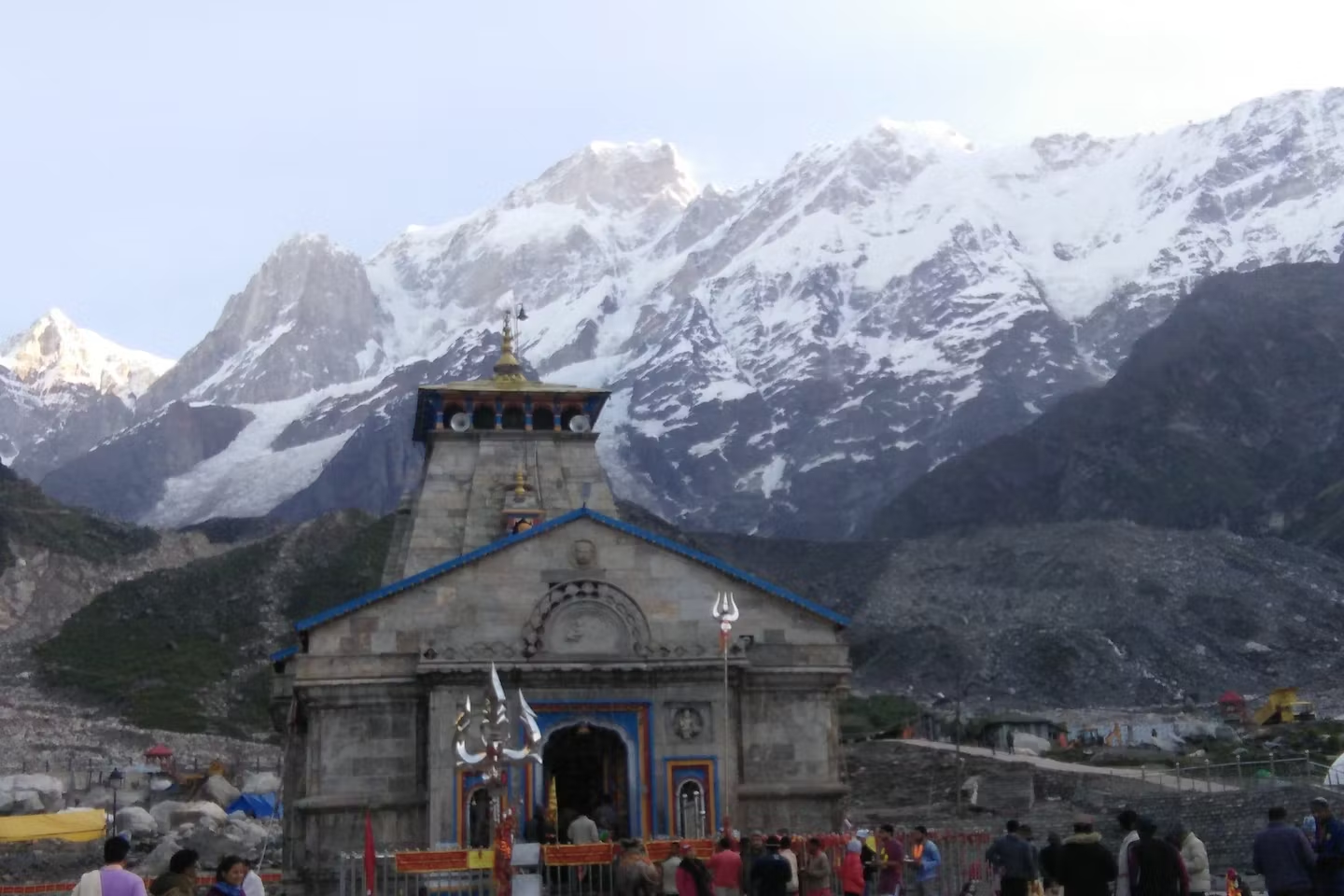
Kedarnath is known as the most remote of the Char Dham and one of the 12 Jyotirlingas, a stone temple at 3,583 m in Uttarakhand's Rudraprayag district that opens for only six months a year. The yatra ends with a 16-km trek from Gaurikund that climbs past Rambara and Lincholi to the temple beneath the Kedarnath peak, through pine and deodar and then bare rock and snow. The food is dal-rice and aloo paratha from dhabas that open at 4 am; the temple's evening aarti under the peaks is the point of it all. A Kedarnath trip is a pilgrimage and a trek in one, with Guptkashi and Sonprayag as the stops on the way up. Picture a dawn start from Gaurikund, the temple bells at 3,500 m and a plate of halwa after darshan.
Places to Visit in Kedarnath
- Kedarnath Temple: The 8th-century stone temple attributed to Adi Shankaracharya, rebuilt after the 2013 floods, with the Bhairavnath temple above it and the Chorabari (Gandhi Sarovar) lake 3 km on. Open late April to early November; darshan from 4 am, aarti at 6 pm.
- Bhairavnath Temple: A 1-km climb above the main temple to the shrine of Kedarnath's guardian deity, with the best view of the temple and valley; pilgrims visit after darshan.
- Chorabari Tal (Gandhi Sarovar): A glacial lake 3 km above the temple at 3,900 m, a two-hour walk each way on a marked trail; the source of the Mandakini and the site of the 2013 flood.
- Vasuki Tal: An 8-km trek from Kedarnath temple to a glacial lake at 4,150 m beneath Chaukhamba, for fit walkers with a guide; the best day hike from the temple in September and October.
- Gaurikund Hot Springs: The road head and trek start, with a temple to Parvati and thermal springs where pilgrims bathe before the climb; the dhabas here open at 4 am.
- Triyuginarayan Temple: 12 km from Sonprayag, the Vishnu temple where Shiva and Parvati are said to have married, with a fire that has burned since; pilgrims take ash from it. A quiet detour on the way up. Timings: 6 am to 8 pm.
Top Experiences
- Trek from Gaurikund to Kedarnath: The 16-km paved trail climbs 1,500 m in 6 to 8 hours past Rambara and Lincholi, with tea stalls every kilometre and ponies, palanquins and pitthus for hire. Start by 5 am; registration at Sonprayag is mandatory.
- Take a Helicopter to the Temple: Shuttles from Phata, Sersi and Guptkashi reach Kedarnath in 8 minutes and are booked on the IRCTC heli portal; they sell out weeks ahead in May and October and are weather-dependent.
- Attend the Evening Aarti: The 6 pm aarti at the temple, with the peaks turning pink behind it, is the reason to stay overnight at Kedarnath rather than day-trip; GMVN and private lodges near the temple take bookings.
- Visit in the Shoulder Season: September and October after the monsoon give clear skies, snow on the peaks and fewer crowds than May and June; the temple closes around Bhai Dooj in late October or early November.
- Combine with Tungnath and Chopta: From Ukhimath, Chopta is 30 km and Tungnath a 3.5-km trek; many pilgrims do Kedarnath and Tungnath (two of the Panch Kedar) in one trip of four or five days.
Where to Eat
- Krishna Restaurant: Near the temple at Kedarnath, an affordable vegetarian restaurant for dal fry, paneer and thalis with the peaks outside; the most reliable sit-down meal at the top. Cost for two: ~500 INR
- GMVN Camp Canteen: The government canteen at Kedarnath serves a fixed thali and breakfast at set prices; basic, hot and the cheapest full meal at altitude. Cost for two: ~400 INR
- Halwa Point: The stalls near the temple selling sooji halwa and chai after darshan, a Kedarnath tradition; hot, sweet and exactly what you want at 3,500 m. Cost for two: ~150 INR
- Gaurikund dhabas: The row of dhabas at the trek start, open from 4 am, serving aloo paratha, poori-sabzi and ginger tea to pilgrims setting off; pick any with a queue. Cost for two: ~250 INR