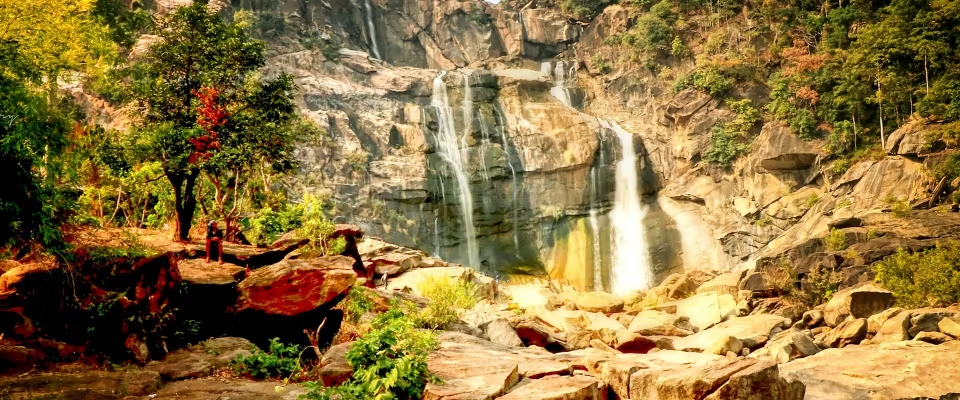
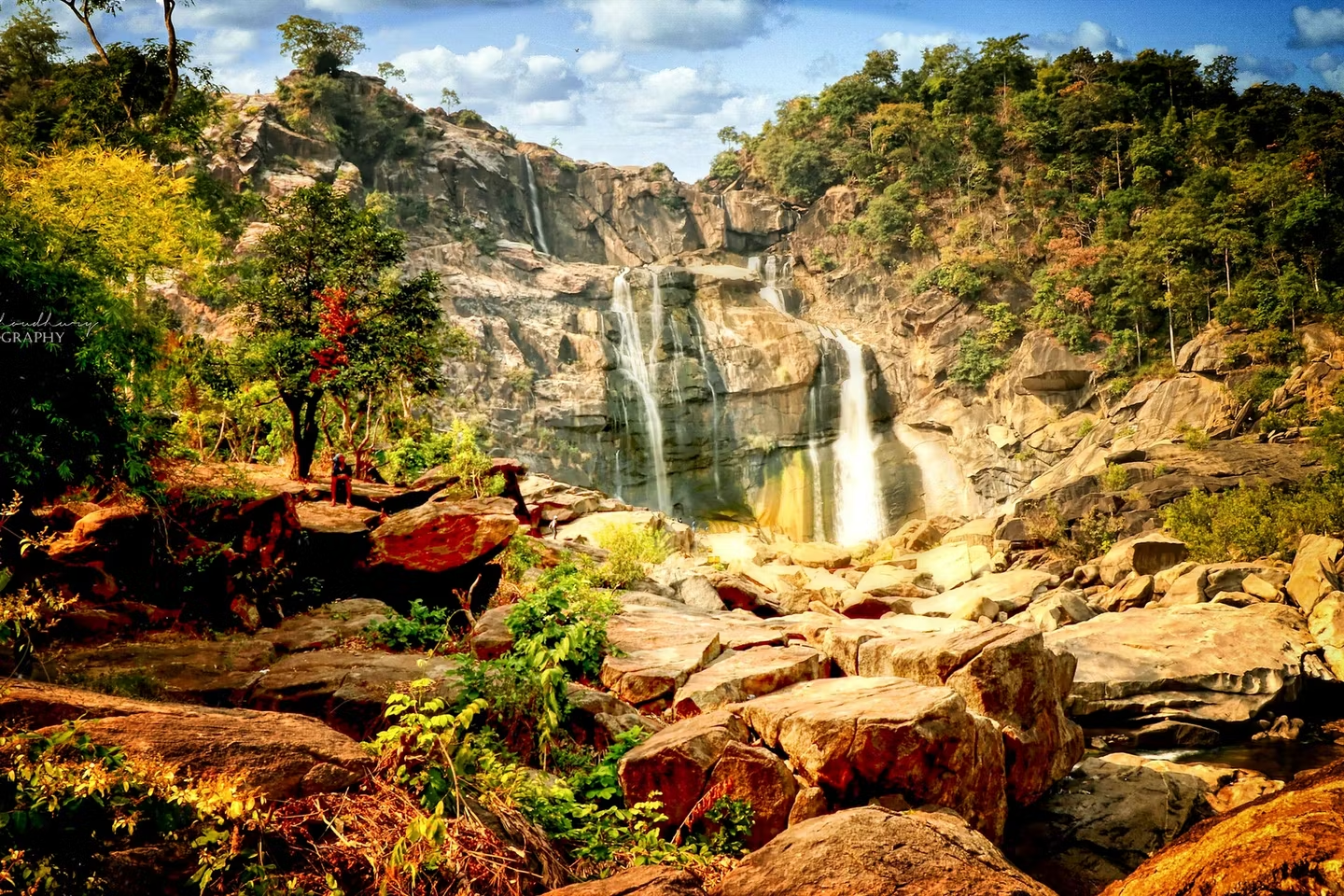
Jharkhand is known for waterfalls, tribal culture and forests that most of India has never visited. Carved from Bihar in 2000, it is the Chota Nagpur plateau: Ranchi ringed by Hundru, Dassam, Jonha and Hirni falls, the Patratu Valley's hairpin road, Netarhat's sunrise plateau in the west, Betla National Park's elephants and tigers under Palamu fort, and Deoghar's Baidyanath Jyotirlinga in the east, where the Shravani Mela brings a million kanwariyas each monsoon. Santhal, Munda and Oraon villages hold the tribal heartland; Jamshedpur is the steel city. Things to do in Jharkhand are best from August to November for the waterfalls and October to February for everything else. Picture a 98-m waterfall after rain, a dhuska and ghugni breakfast and a sunrise over Netarhat with nobody else there.
Places to Visit in Jharkhand
- Ranchi: The capital at 650 m on the plateau, with Tagore Hill, the Rock Garden and Kanke Dam, the Pahari Mandir and Jagannath temple, and five waterfalls within 50 km: Hundru (98 m), Dassam, Jonha, Hirni and Panchghagh. The base for everything in the state.
- Patratu Valley: The 40-km drive north of Ranchi with a famous hairpin descent to Patratu Dam, the state's most photographed road, with boating on the reservoir and the Patratu Lake Resort at the bottom. A half-day from the capital.
- Netarhat: The Queen of Chota Nagpur, a plateau at 1,100 m 150 km west of Ranchi, with the Magnolia sunset point, Koel View sunrise, Upper Ghaghri and Lodh falls (Jharkhand's tallest at 143 m). Cool, forested and quiet.
- Betla National Park: Part of the Palamu Tiger Reserve, 170 km west of Ranchi, with wild elephants, gaur, leopards and sal forest, the 16th-century Palamu forts inside it and jeep safaris from the Betla gate. Open October to June.
- Deoghar: The Baidyanath temple is one of the 12 Jyotirlingas and a Shakti Peeth, 250 km from Ranchi; the Shravani Mela in July-August brings kanwariyas carrying Ganga water from Sultanganj 105 km away. Trikut hills' ropeway and Naulakha temple are nearby.
- Parasnath Hill: The offbeat one: Jharkhand's highest point at 1,350 m, near Giridih, and the holiest Jain site in eastern India, where 20 of the 24 Tirthankaras attained moksha. A 9-km pilgrim trek to the summit temples through forest. 160 km from Ranchi.
Top Experiences
- Chase the Waterfalls: Do Hundru, Jonha and Dassam in a day from Ranchi, best from August to November when the monsoon has filled them; the steps down to Hundru are the workout. Hirni and Panchghagh are the quieter extras.
- Drive the Patratu Valley Road: The hairpin descent from the plateau to the dam is Jharkhand's road-trip moment; go at sunrise, stop at the viewpoint and boat on the reservoir below. Year-round; mist in winter.
- Go on a Betla Safari: Jeep safaris in Palamu Tiger Reserve for elephants, bison and the occasional tiger, with Palamu fort ruins inside the park. October to June; March to May for sightings.
- Eat Tribal Jharkhand: Dhuska (fried rice-lentil bread) with ghugni, rugra mushrooms in monsoon, bamboo-shoot curry and handia rice beer at village haats. Ajam Emba in Ranchi plates the indigenous cuisine properly.
- Join the Shravani Mela: For a month in July-August, a million saffron-clad kanwariyas walk 105 km from Sultanganj to Deoghar carrying Ganga water for the Baidyanath Jyotirlinga. One of India's largest religious walks.
Where to Eat
- Ajam Emba, Ranchi: The Kanke Road restaurant reviving indigenous Jharkhand cuisine, named in Kurukh for 'great tasting food': handi ghosht, dhuska, rugra and millet dishes cooked by tribal women. Cost for two: ~800 INR
- Angithi, Ranchi: The Club Road family restaurant known for dehati chicken, kebab platters and North Indian staples in a traditional setting. Cost for two: ~900 INR
- The Great Kebab Factory, Ranchi: The kebab specialist in the Radisson Blu, with a seven-course grilled menu and a tribal-style bhuna murga. Cost for two: ~2500 INR
- Flaves, Ranchi: The busy all-vegetarian restaurant for chaats, thalis and regional dishes, a family favourite in the city centre. Cost for two: ~600 INR