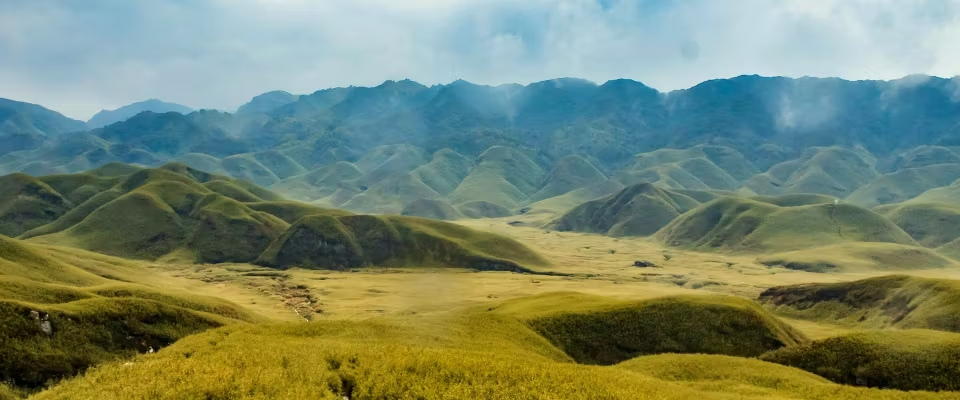
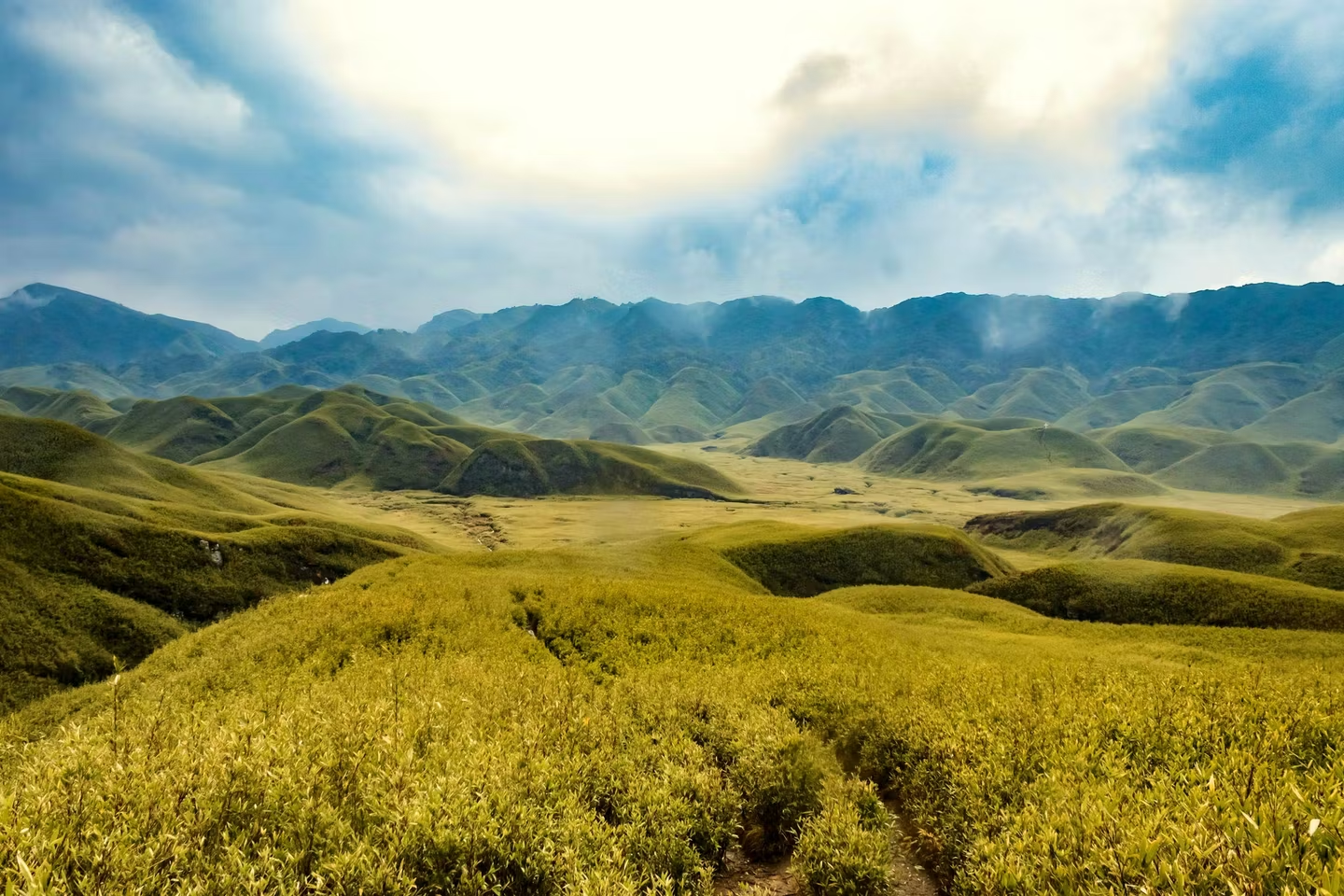
Dzukou Valley is known for green hills that look combed, a lily found nowhere else and a trek that anyone fit can do in two days. On the Nagaland-Manipur border 30 km south of Kohima, the valley is a 2,450-m plateau of dwarf bamboo and grass cut by clear streams, reached by a 3-hour climb from Viswema or a steeper 4-hour one from Zakhama. The Dzukou Valley trek is 15 km round trip, moderate, with a rest house and camping at the rim; the lily blooms in June-July, the valley is green until October and frosted in January. An Inner Line Permit is needed for Nagaland. Picture a valley with no trees, a stream you can follow for hours and a sunrise that turns the whole thing gold.
Places to Visit in Dzukou Valley
- Viswema Trailhead: The village 25 km from Kohima on the Imphal road where jeeps climb 8 km to the trail start; from there a 2-hour forest path and a final steep section reach the valley rim. The easier of the two routes.
- Zakhama Trail: The alternative start 20 km from Kohima, a steeper 4-hour climb through forest with a stream crossing; trekkers often go up Zakhama and down Viswema.
- Dzukou Rest House: The Nagaland Tourism rest house and camping ground on the rim at 2,450 m, with dormitory rooms, a kitchen serving rice and dal, and the first full view of the valley; the overnight base.
- The Valley Floor: A 2-hour descent from the rest house to the stream-cut floor, where caves shelter trekkers and the Dzukou lily (Lilium chitrangadae) grows in June-July; the grass is green May to October and rust-red in winter.
- Japfu Peak: Nagaland's second-highest at 3,048 m, a separate 5-hour climb from Kigwema village, with a record-size rhododendron tree near the top; combined with Dzukou by strong trekkers.
- Kohima: The base city 30 km north, with the WWII cemetery, Kisama heritage village and the ILP office; the Hornbill Festival (1-10 December) and the trek pair well.
Top Experiences
- Trek Viswema to the Rest House: The standard day one: jeep to the trailhead, 3 hours up, sunset from the rim; carry water, a torch and cash for the rest house. Year-round except heavy monsoon days.
- See the Dzukou Lily Bloom: The valley's endemic lily flowers in late June and July across the floor, alongside euphorbia and rhododendron on the slopes; the busiest and wettest season.
- Camp on the Rim in Winter: December to February bring frost, occasional snow and the clearest skies; the valley turns gold-brown and the rest house empties.
- Follow the Stream to the Caves: A half-day walk along the valley floor from the rest house to the trekkers' caves and the border ridge, with Manipur's Senapati hills beyond.
- Combine with Hornbill Festival: Trek in the first week of December and spend the rest at Kisama's Hornbill Festival, 10 km from Kohima, for the full Nagaland week.
Where to Eat
- Dzukou Rest House Kitchen: The tourism rest house on the rim cooks rice, dal, vegetables and maggi for trekkers on a fixed menu; carry snacks and buy hot tea here. Cost for two: ~300 INR
- Dream Cafe, Kohima: A Midland Colony cafe for coffee, momos, Naga pork dishes and bakes; the pre-trek breakfast and post-trek cake stop. Cost for two: ~500 INR
- Flaming Wok, Kohima: A NH61 restaurant for Chinese, Naga and Indian plates with smoked pork and bamboo-shoot dishes; filling and quick. Cost for two: ~500 INR
- Popular Bakery, Kohima: The PR Hill bakery on NH39 for buns, pastries and tea since the 1980s; the cheapest breakfast in town. Cost for two: ~200 INR