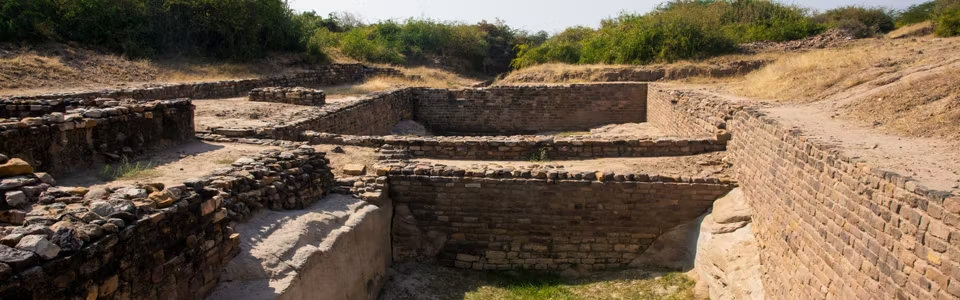
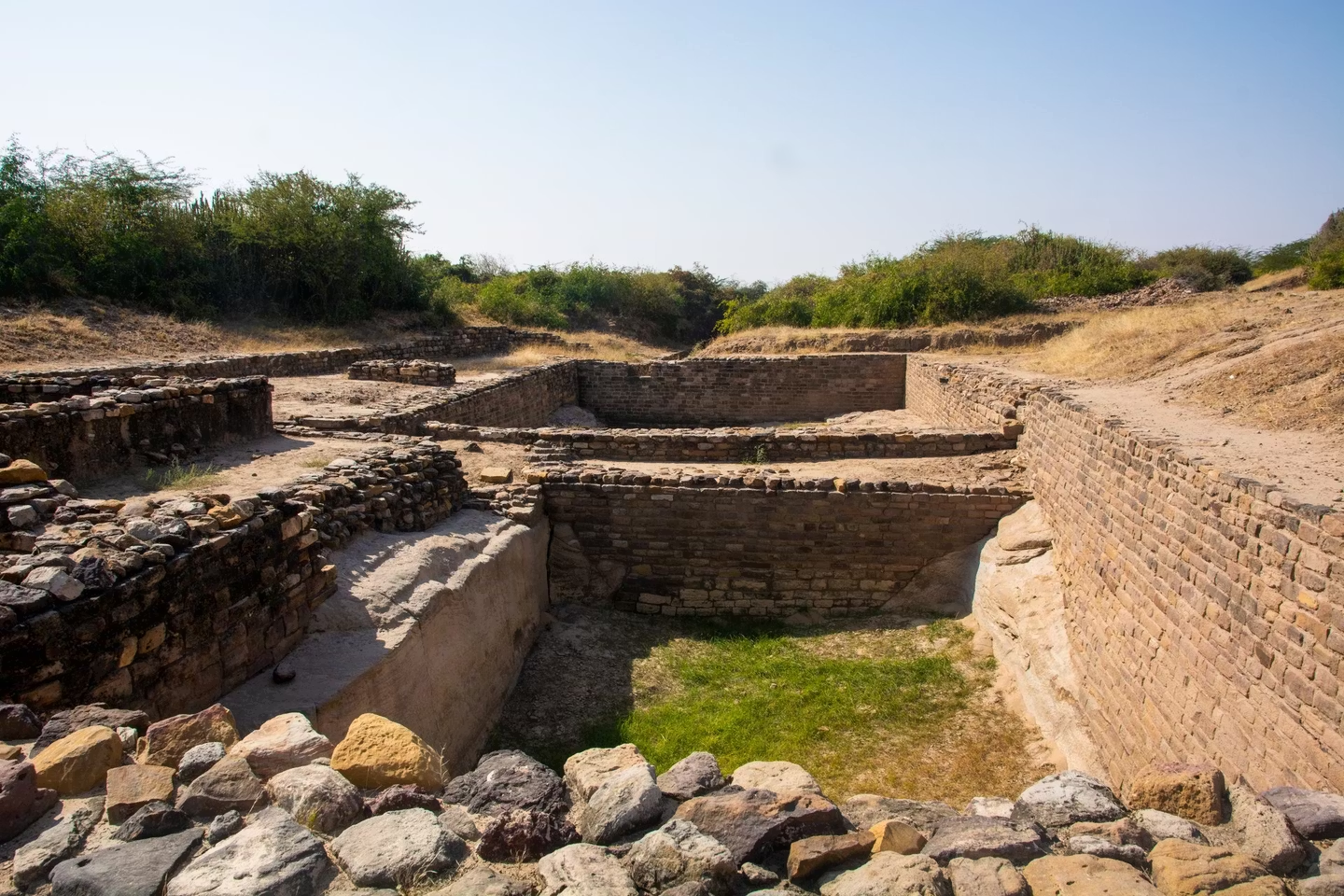
Dholavira is known as India's newest UNESCO World Heritage Site, a 4,500-year-old Harappan city on Khadir Bet island in Gujarat's Great Rann of Kutch, with the world's earliest known water-conservation system of reservoirs, stepwells and channels cut into the rock. The approach is the point: the 30-km Road to Heaven runs dead straight across the white salt flats from the Rann, with flamingos in the shallows and nothing else to the horizon. Beyond the citadel and the museum there is the Jurassic fossil park, the sunset over the Rann from the viewpoint and the Rabari and Ahir villages of Khadir. Things to do in Dholavira are few but unforgettable, and the Rann Utsav season from November to February is the time. Picture the white Rann at sunrise, a Harappan reservoir at noon and a Kutchi thali under the stars.
Places to Visit in Dholavira
- Dholavira Archaeological Site: The excavated Harappan city with its citadel, middle and lower towns, 16 reservoirs, a stadium and the 10-letter signboard in Indus script; a UNESCO site since 2021 with a small museum at the entrance. Allow three hours with a guide. Timings: 8 am to 6 pm.
- Road to Heaven: The 30-km causeway from Khavda across the Great Rann to Khadir Bet, dead straight over the salt flats with the water on both sides in winter; stop at the midpoint for photographs.
- Dholavira Fossil Park: 5 km from the site, a park of Jurassic fossilised tree trunks and marine fossils on the island's edge, with a viewpoint over the Rann. Timings: 8 am to 6 pm.
- Rann Sunset Point: The western tip of Khadir Bet, where the salt flats turn pink and then silver at sunset and the flamingo flocks feed in the shallows between November and February.
- Khadir Bet Villages: The Rabari and Ahir herding villages on the island, with embroidered textiles, bhunga mud houses and the Dholavira village itself; ask your homestay for a walk.
- Kalo Dungar (Black Hill): 100 km back towards Bhuj, Kutch's highest point at 462 m, with the Dattatreya temple, a jackal-feeding ritual at dusk and a panoramic view of the Rann and the Pakistan border.
Top Experiences
- Walk the Harappan City with a Guide: The ASI-trained guides at the gate explain the water system, the signboard and the citadel in a way the signage does not; book one on arrival. Early morning before the heat.
- Drive the Road to Heaven at Sunrise: Leave Khavda or Dhordo before dawn to cross the causeway as the salt flats turn pink; the water on both sides in winter makes it a mirror.
- Watch Flamingos on the Rann: Between November and February the shallows along the causeway and the sunset point host thousands of greater and lesser flamingos; carry binoculars.
- Stay in a Bhunga: Resorts and homestays around Dholavira village offer the round mud-and-mirror bhunga huts of Kutch, with Kutchi meals and folk music in the evenings; the only accommodation on the island.
- Combine with Rann Utsav: The tent city at Dhordo, 110 km away, runs November to February with crafts, music and the full-moon nights on the White Rann; Dholavira is the day trip from there.
Where to Eat
- Rann Resort Dholavira: The main resort on Khadir Bet, 3 km from the site, serving Kutchi and Gujarati vegetarian thalis to guests and day visitors in its dining hall; the most reliable full meal on the island. Cost for two: ~600 INR
- Toran Tourist Complex: The Gujarat Tourism rest house beside the archaeological site, with a canteen serving simple Gujarati thalis and tea; basic but there when nothing else is. Cost for two: ~400 INR
- Dholavira village homestay kitchens: The village homestays serve home-cooked Kutchi food, bajra rotla, kadhi, dal and buttermilk, to their guests and to day visitors with notice. Cost for two: ~400 INR