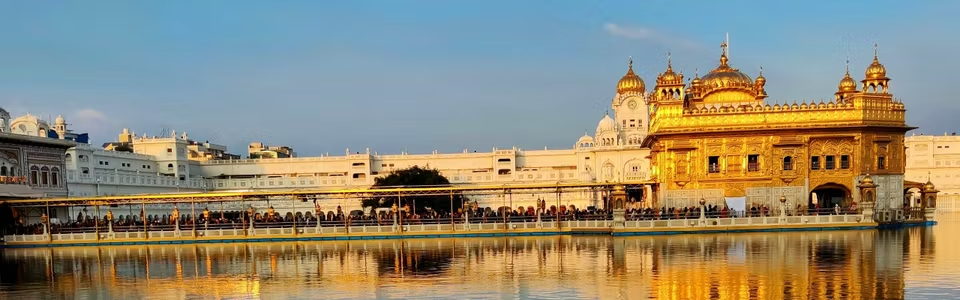
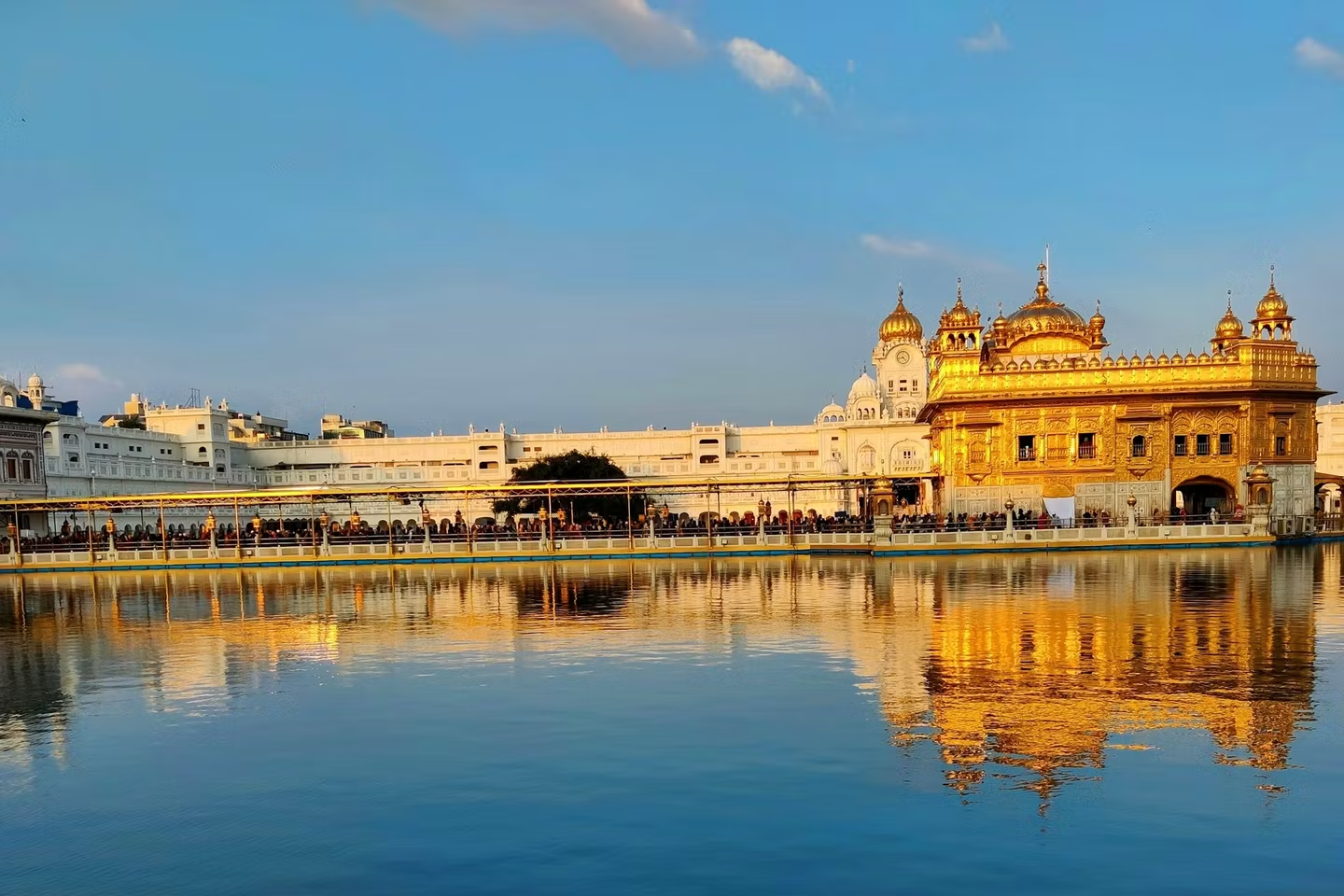
Amritsar is known for the Golden Temple, for the Wagah border ceremony 30 km west, and for a food culture that has made Punjab's spiritual capital the most delicious city in north India. The Harmandir Sahib sits in a pool of water in the middle of the old city, open to everyone around the clock, with a langar that feeds up to 100,000 people a day; Jallianwala Bagh is two minutes away, the Partition Museum five, and the lanes of Hall Bazaar and Katra Jaimal Singh sell everything from phulkari to papad-wadi. The old city's dhabas, Kesar da Dhaba, Bharawan, Kulcha Land, have been serving the same dishes for generations. Things to do in Amritsar fit in two days; the food takes longer. Picture the Golden Temple's reflection at 4 am, an Amritsari kulcha with chhole and a glass of lassi, and the flag-lowering roar at Attari at sunset.
Places to Visit in Amritsar
- Golden Temple (Harmandir Sahib): The holiest Gurdwara of Sikhism, a gold-plated sanctum in the Amrit Sarovar reached by a marble causeway; open 24 hours, head covered, shoes off, free to all. The 4 am Palki Sahib ceremony is the quietest time.
- Jallianwala Bagh: The walled garden where British troops fired on an unarmed gathering on 13 April 1919; the bullet marks, the martyrs' well and the memorial flame remain. Timings: 6:30 am to 9:30 pm.
- Wagah-Attari Border: 30 km west, the daily flag-lowering ceremony between Indian and Pakistani border guards at sunset, with grandstands and a crowd of thousands; arrive by 3:30 pm.
- Partition Museum: In the Town Hall near the temple, the world's first museum on the 1947 Partition, built on oral histories, objects and letters from refugees. Timings: 10 am to 6 pm, closed Mondays.
- Gobindgarh Fort: An 18th-century Sikh fort restored as a heritage park with museums on Ranjit Singh, a 7D show and evening light-and-sound. Timings: 10 am to 10 pm.
- Durgiana Temple: A Hindu temple modelled on the Golden Temple, in a tank with a marble causeway, 1.5 km from the Gurdwara; a quieter mirror of the main shrine.
Top Experiences
- Eat at the Langar: The Golden Temple's community kitchen serves dal, roti and kheer to everyone who sits in rows on the floor; volunteer to roll rotis or wash plates afterwards.
- Do a Heritage Food Walk: Kesar da Dhaba (dal makhani, since 1916), Bharawan da Dhaba, Kulcha Land, Beera Chicken, Makhan Fish, Giani's lassi; the old city within 2 km has them all.
- Watch the Wagah Ceremony: The 45-minute beating-retreat with high kicks, drums and a stand full of flags; sit on the Indian side's VIP stand with a passport for a closer view.
- Sit at the Sarovar at Night: After the Sukhasan ceremony around 10 pm the temple is lit and nearly empty; the marble parikrama is the city's most peaceful walk.
- Shop Hall Bazaar and Katra Jaimal Singh: Phulkari dupattas, Punjabi juttis, papad and wadi, Amritsari pickles; the bazaars run from the Hall Gate to the temple.
Where to Eat
- Kesar Da Dhaba: Open since 1916 near Chowk Passian, the vegetarian dhaba whose dal makhani simmers overnight; also the lachha paratha, palak paneer and phirni in clay cups. Cost for two: ~500 INR
- Bharawan Da Dhaba: Opposite the Town Hall, the other old-city vegetarian legend for Amritsari kulcha, chhole and sarson da saag with makki roti in winter. Cost for two: ~500 INR
- Beera Chicken House: On Majitha Road, a no-frills shop whose tandoori chicken and chicken tikka have a city-wide following; takeaway-style with a few tables. Cost for two: ~700 INR
- Kulcha Land: On Ranjit Avenue, the place for the Amritsari kulcha done right: potato or paneer stuffed, crisp and buttered, with chhole and chutney. Cost for two: ~300 INR
- Makhan Fish and Chicken Corner: A Majitha Road institution for Amritsari fried fish, fish do pyaza and tandoori; the fish is from the local rivers. Cost for two: ~900 INR