

The Ultimate Nashik Travel Guide: Wine, Worship, and Weekend Adventures
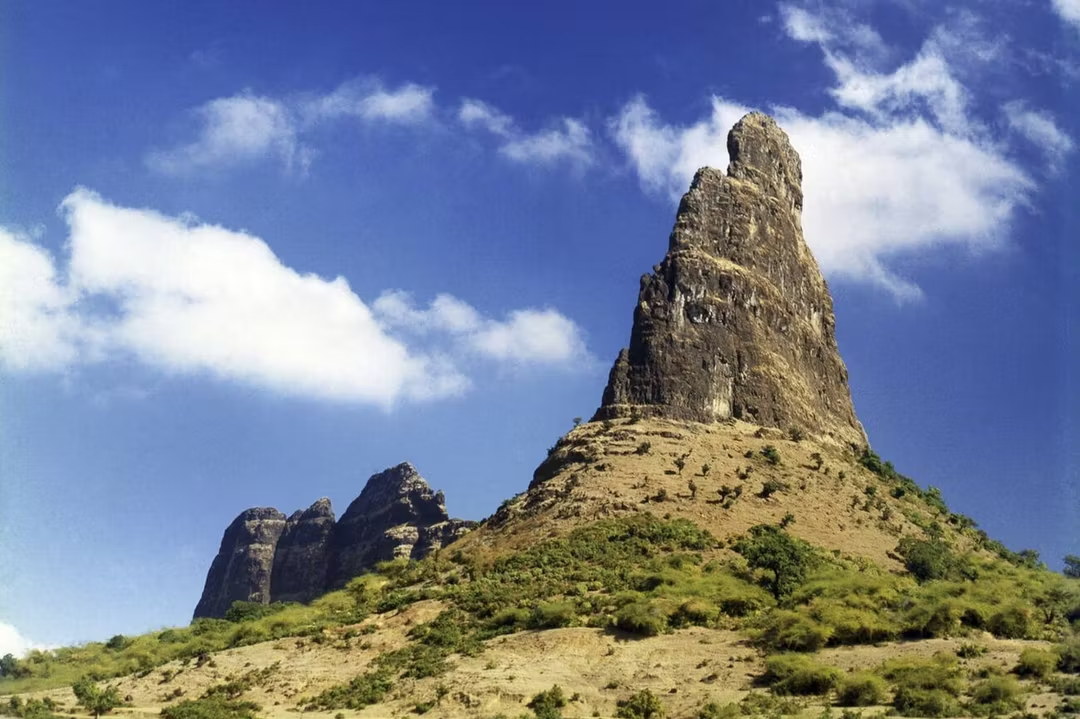
Why visit Nashik?
Often overshadowed by its bustling neighbours, Mumbai and Pune, Nashik has quietly evolved into one of Maharashtra's most versatile destinations. It is a city of fascinating contrasts. On one side, you have the ancient "Varanasi of the South" where pilgrims flock to the holy Godavari river. On the other hand, you discover the sophisticated "Wine Capital of India" where rolling vineyards offer world-class tasting experiences.
If you are planning a weekend getaway from Mumbai or Pune, Nashik tourism offers the perfect remedy for city fatigue. The city does not just rely on its history; it has reinvented itself as a hub for luxury resorts, adventure trekking and culinary delights, which you can find in this Nashik travel guide.
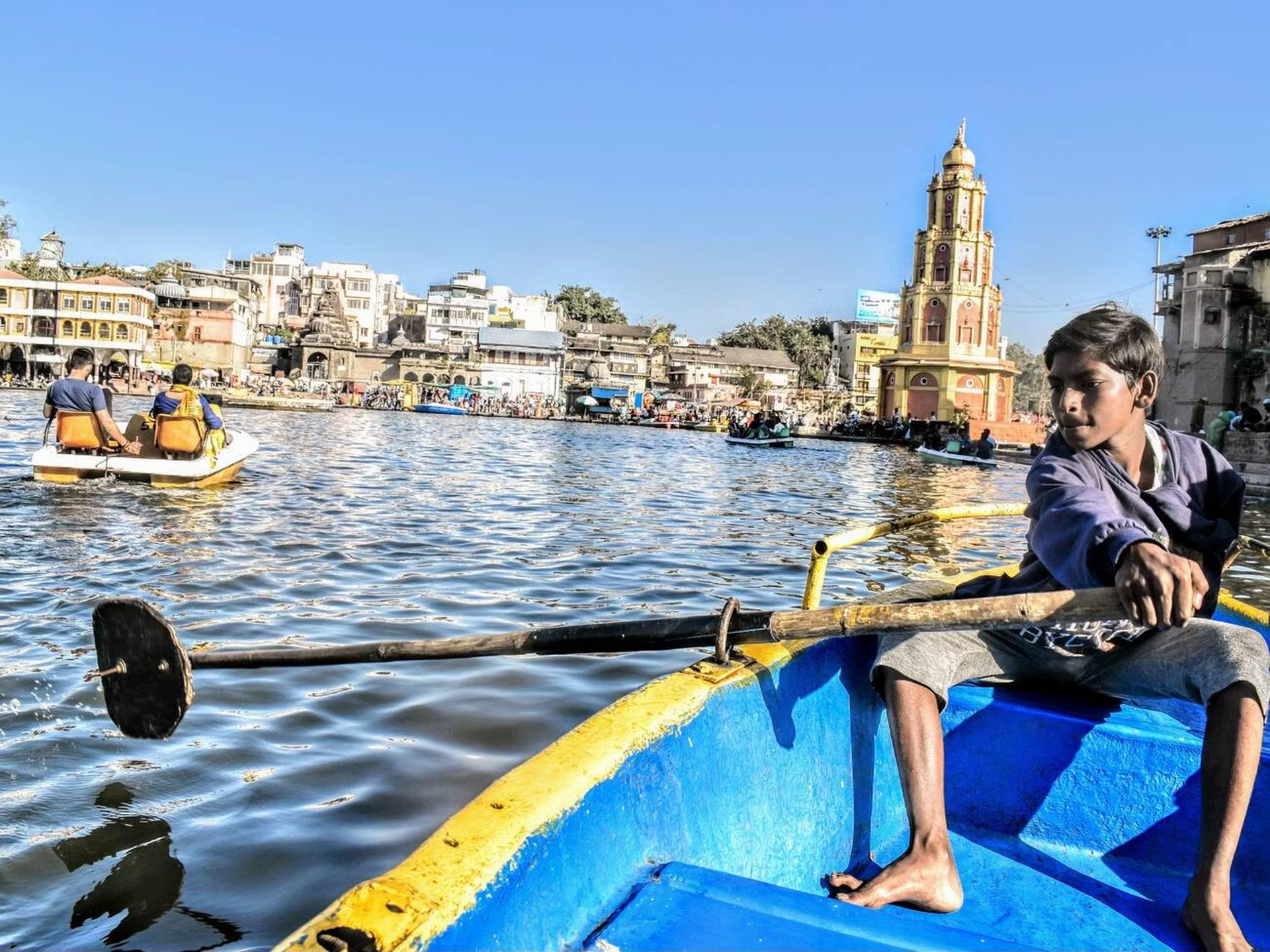
Boy rowing travellers on a boat in Nashik.
When is the best time to visit Nashik?
The weather plays a crucial role in planning your itinerary, so here is a breakdown of what to expect during different seasons.
Winter (October to February): This is widely considered the best time to visit. The weather is pleasant and crisp, with temperatures dropping to a cool 8°C at night. It is the ideal season for exploring the various places to visit in Nashik, enjoying an outdoor vineyard tour or taking a heritage walk through the old city.
Monsoon (June to September): If you are a nature lover or a photography enthusiast, the rains transform Nashik into a lush green paradise. This is the prime season for trekkers heading to forts like Harihar or Anjaneri, though vineyard tours might be restricted due to the rain.
Summer (March to May): The days can get quite hot, with temperatures touching 40°C. However, evenings are generally bearable. This is a good time for budget travellers to find great deals on luxury resorts, provided you plan your sightseeing for early mornings or late evenings.
Getting There & Around (Logistics)
Nashik is incredibly well-connected to Maharashtra's major metros, making it an effortless road trip or a quick train ride away. Here is how to reach the city and navigate it like a local.
By road:
Driving to Nashik is an experience in itself, especially during the monsoon or winter months.
From Mumbai (approx. 167 km | 3.5 hours): The most popular route is via the NH160 (Mumbai-Nashik Expressway). The drive is smooth, but the highlight is undoubtedly the Kasara Ghat.
Insider tip: Be cautious on the ghats during heavy rains due to fog. Stop at the food court near Igatpuri for a quick Vada Pav and tea break with a view.
From Pune (approx. 210 km | 4.5 hours): The route via Sangamner (NH60) is your best bet. The road is generally in good condition, though traffic can get heavy near Chakan.
By train:
Nashik Road station is the primary railhead.
The "Cult Classic": If you are travelling from Mumbai, the Panchvati Express (12109) is the legendary commuter favourite. It departs from CSMT at 18:15 and reaches Nashik by 21:30. It is a fast, punctual, and offers a true local experience.
Premium option: For a more luxurious journey, you can catch the Vande Bharat Express (Mumbai-Shirdi or Mumbai-Solapur routes), which has a scheduled halt at Nashik Road.
Station transfer: The railway station is about 9-10 km from the main city (CBS/Panchavati area). You will need to take a city bus or an auto-rickshaw to get to the centre.
By bus:
MSRTC Shivneri: These unmatched Volvo AC buses run frequently from Pune (Shivajinagar) and Mumbai (Dadar/Borivali). They are safe, punctual and comfortable.
Expected fare: Approx. ₹500–₹600.
Private operators: Neeta Travels and Purple Travels run sleeper coaches, which are a good option if you want to rest during the journey.
Getting around Nashik:
Once you have arrived, here is how to navigate the city without getting ripped off.
Auto rickshaws: Nashik autos are generally reliable. As of early 2025, the official metered rate starts at a minimum fare of ₹26 for the first 1.5 km.
Pro tip: Always insist on the meter ("Meter se chalo"). If they refuse, use ride-hailing apps or look for the prepaid stand at the railway station.
Nashik Darshan Bus (Best for pilgrims): If you are here strictly for temples, this is the most economical option. These buses usually start from CBS (Central Bus Stand) around 08:00 AM.
Cost: Approx. ₹350 per seat.
Route: Covers Trimbakeshwar, Muktidham, Panchavati and Someshwar Waterfall in a single day.
Renting a vehicle: For vineyard hopping, having your own vehicle is essential, as cabs can be expensive to keep waiting. You can rent scooters or bikes near the Old CBS area or College Road.
Vineyard Guide
Nashik is proudly hailed as the "Napa Valley of India", producing approximately 80% of the country's wine. However, you do not need to be a sommelier to enjoy this part of the city. The vineyard experience here is less about technical jargon and more about relaxing with a view of the Sahyadri mountains, a glass of Chenin Blanc in hand.
Here is a breakdown of the top estates to help you decide which one suits your vibe.
1. Sula Vineyards:
Best for: First-timers, lively crowds and the "tourist" experience.
Sula Vineyards, Nashik, is where the Indian wine revolution began. It is arguably the most commercial and crowded spot, but it is iconic for a reason. The estate is massive, featuring multiple restaurants, a gift shop and a distinct amphitheatre.
Insider tip: If you want to beat the crowds, book the first tour of the day at 11:30 AM. However, if you enjoy a buzz, the sunset view from the Tasting Room balcony is unbeatable.
Stay: Your favourite travel brand has already made arrangements for your relaxing, happening, and rejuvenating stay, just ten minutes from Sula Vineyards. Check it out here.
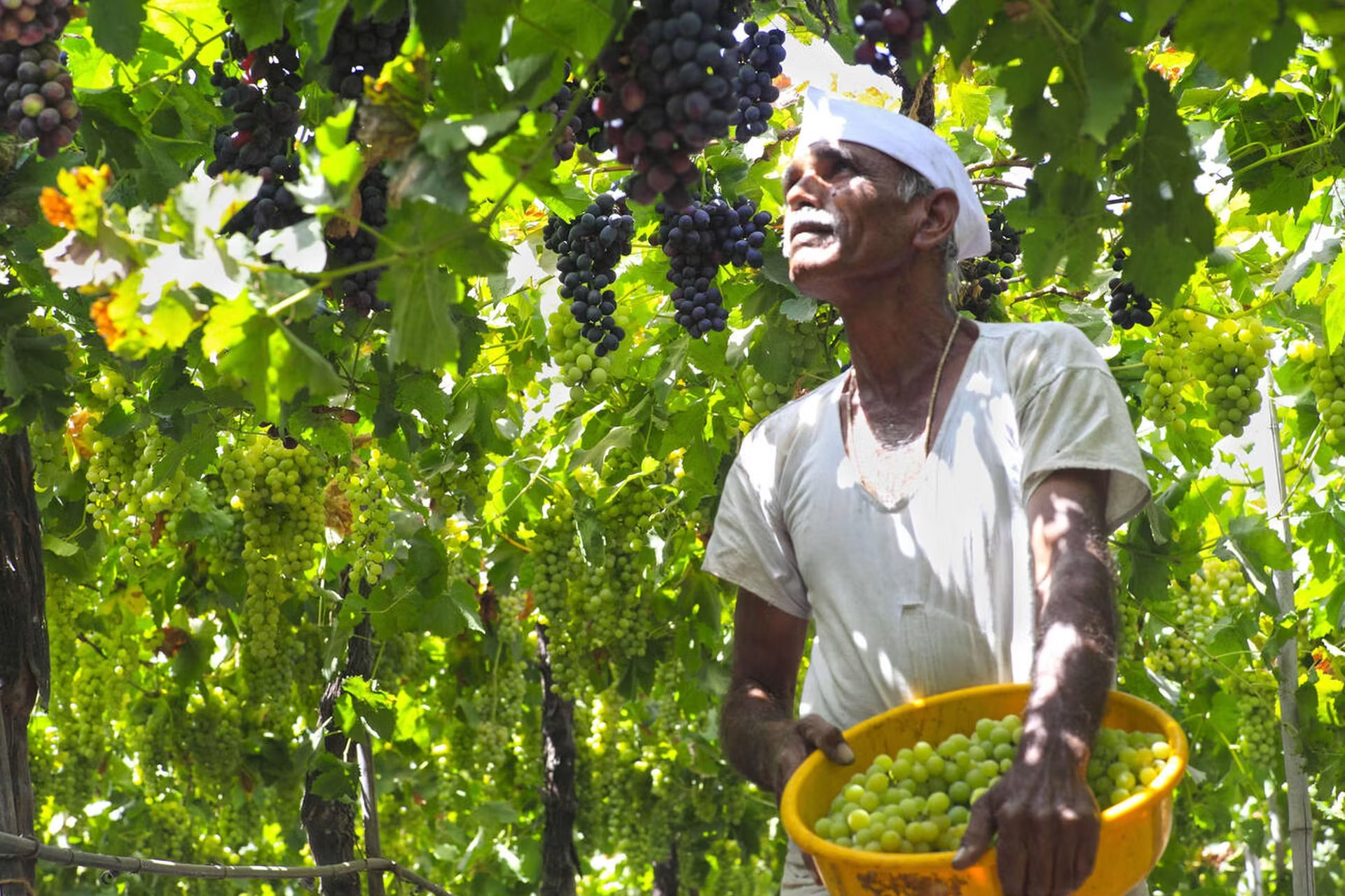
A farmer plucking grapes in a vineyard in Nashik.
2. York Winery:
Best for: Relaxed conversations, foodies, and sunset lovers.
Located just a stone's throw from Sula, York Winery offers a starkly different atmosphere. It is quieter, laid-back and feels less like a theme park. Their tasting room has perhaps the best unobstructed view of the Gangapur Dam. Their in-house restaurant, Yorker's, serves excellent Indian food that pairs surprisingly well with their Shiraz.
3. Soma Vine Village:
Best for: Families, large groups, and overnight stays.
Soma Vine Village is designed as a resort first and a winery second. It is extremely popular for its Regenta Resort, which offers rooms with balconies opening directly onto the vineyards. They offer a more intimate tasting session than Sula. If you are staying here, you can enjoy a late-night walk by the vines, which is a magical experience.
4. Vallonne Vineyards:
Best for: Couples, solitude seekers and French-style wines.
Situated near Igatpuri (about 45 minutes from the main Nashik wine belt), Vallonne Vineyards is a boutique estate that feels like a slice of the French countryside. It is small, quiet and incredibly scenic. Their restaurant, Malaka Spice, sits by a lake and offers a stunning view of the Mukhne Dam. It is the perfect spot for a romantic lunch away from the city noise.
Practical tips for wine tourists:
Grape stomping season: If you want to experience the famous grape stomping in Nashik, you must visit during the harvest season, which runs from January to March.
Wine tasting prices: Most vineyards charge an entry or cover fee (approx. ₹200 to ₹600), which is often redeemable against wine or food. A standard tasting session usually costs between ₹400 and ₹800 per person, depending on the number of wines you sample.
Transport: These vineyards are located on the outskirts (Gangapur Dam area). Uber and Ola drivers might drop you there, but they can be reluctant to pick you up. It is highly recommended to hire a private taxi for the day or negotiate a return trip with your auto-rickshaw driver beforehand.
Spiritual Nashik
For centuries, Nashik has been a pilgrimage site of immense importance. Known as the "Varanasi of the South", it is one of the four locations for the massive Kumbh Mela. Even if you are not religious, the ancient architecture and energy of these sites are captivating.
Here is how to navigate the holy trail without getting lost in the crowds.
1. Trimbakeshwar Jyotirlinga
Located about 28 km from the main city, the Trimbakeshwar Temple houses one of the twelve revered Jyotirlingas. The temple is built from black stone and sits at the foothills of the Brahmagiri mountain, creating a dramatic backdrop.
Note: The general queue can take anywhere from 3 to 6 hours, especially on Mondays.
Official booking: You can book a "Donation Darshan Pass" online via the official Trimbakeshwar Trust website or purchase it at the trust office near the entrance. The cost is typically ₹200 per person.
Timings: The temple opens at 05:30 AM and closes at 09:00 PM. The best time to visit is early morning on a weekday (Tuesday or Wednesday) to avoid the rush.
Dress code: While general darshan allows modest casual wear (shoulders and knees covered), men entering the inner sanctum (Garbha Griha) for special pujas must wear a dhoti and uparna (upper cloth). These are available for rent from nearby shops.
Insider tip: If you visit on a Monday between 04:00 PM and 05:00 PM, you can witness the special display of the jewelled "Golden Crown" of the deity.
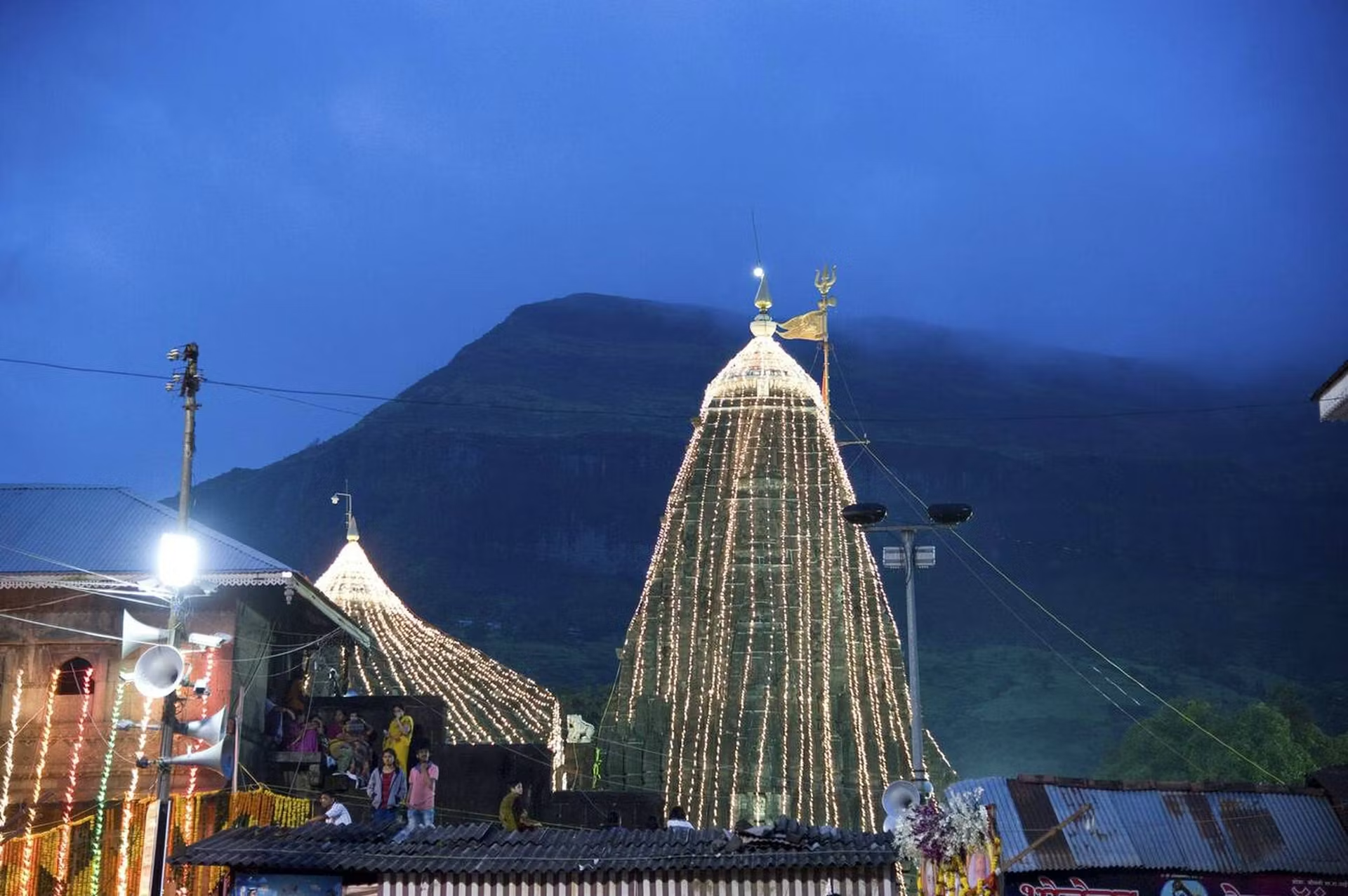
Trimbakeshwar Temple in Nashik-one of the twelve Jyotirlingas.
2. Panchavati Complex
This area is the spiritual heart of Nashik city itself. You can easily cover these spots on foot in about two hours.
Kalaram Temple: An architectural marvel built entirely of black stone in 1790. The temple is dedicated to Lord Rama and is famous for its 70-foot-high shikara (spire).
Timings: 06:00 AM to 10:00 PM.
Tip: Visit around sunset when the black stone cools down and the evening lights accentuate the carvings.
Sita Gufa (Sita’s Cave): Located near the five Banyan trees (Panchavati), this is believed to be the spot where Sita was abducted by Ravana.
Warning: The entrance is extremely narrow and requires you to crawl down a small staircase. If you are claustrophobic or have back issues, you might want to skip the interior and pray from the outside.
Timings: 06:00 AM to 08:30 PM.
Ramkund & the Goda Aarti: This is the sacred bathing ghat on the Godavari river. Just like Varanasi, Nashik has its own Ganga Aarti (Goda Aarti) performed here daily. It typically starts around 07:00 PM (dusk). It is less commercial than the one in Haridwar but feels deeply authentic.
3. Pandavleni Caves
While often grouped with temples, these are actually 24 rock-cut Buddhist caves dating back to the 1st century BC. It requires a 20-minute hike (approx. 200 steps) to reach the top.
Best time: Go at 08:00 AM. The morning sun hits the cave entrances perfectly, illuminating the ancient inscriptions and offering a panoramic view of the modern Nashik city skyline.
The Nashik Food Walk
You cannot visit Nashik without diving into its street food culture. The city’s obsession with Misal Pav is legendary, almost like a religion. But beyond the spicy curries, the old city hides some incredible heritage snacks that have stood the test of time.
Here is your curated guide to the best restaurants in Nashik for authentic local flavours.
Every local has a different answer for "Which is the best Misal Pav in Nashik?" To help you decide, we have categorised them by their distinct flavour profiles.
1. Sadhana Chulivarchi Misal
Location: Gangapur Road (Near Someshwar).
This is the most Instagram-famous spot for a reason. As the name suggests (Chulivarchi means "on the wood-fire stove"), the Misal is cooked over firewood, giving the spicy rassa (gravy) a distinct smoky aroma. It is a massive agro-tourism setup. You can enjoy your meal sitting on khatiyas (traditional cots), and they even have horse riding and camel rides for kids.
Best for: Weekend groups and those who want the full "village tourism" feel.
Tip: It’s only 15 mins from Zostel Nashik, so you can easily have it as your breakfast.
2. Ambika Misal
Location: Panchavati (Old City).
Unlike the red gravy found elsewhere, Ambika is famous for its signature black pepper-based spice blend. It is a humble, no-nonsense establishment that opens early in the morning.
Insider tip: Go before 10:00 AM. They often run out of their signature Misal by noon due to high demand.
Best for: Hardcore foodies who care about taste over ambience.
3. Shamsundar Misal
Location: Satpur MIDC.
Located in the industrial belt, this place is a legend among locals. Their Misal strikes the perfect balance; it is spicy but won't burn your palate. The tarri (oil floating on top) is rich and delicious.
Best for: Families and those who want a reliable, authentic taste without extreme heat.
4. Sayantara (Bhadrakali Market)
Established in the 1960s, Sayantara is famous for one thing: Sabudana Vada. Unlike the flat patties found elsewhere, these are golden, crispy spheres that are soft on the inside.
They are served with a unique crushed peanut chutney (not curd) that elevates the taste to a whole new level. It is widely regarded as one of the top items on the Nashik famous food items list.
5. Budha Halwai (Tiwandha Chowk):
The Jalebi King, just a short walk from Sayantara, is Budha Halwai, an institution in itself.
The Dish: Their Jalebis are impossibly crispy and soaked in pure saffron syrup.
Rare Find: If you visit during a fasting festival (like Mahashivratri or Ekadashi), ask for their famous Potato Jalebi, a rare delicacy you won't find easily outside Nashik.
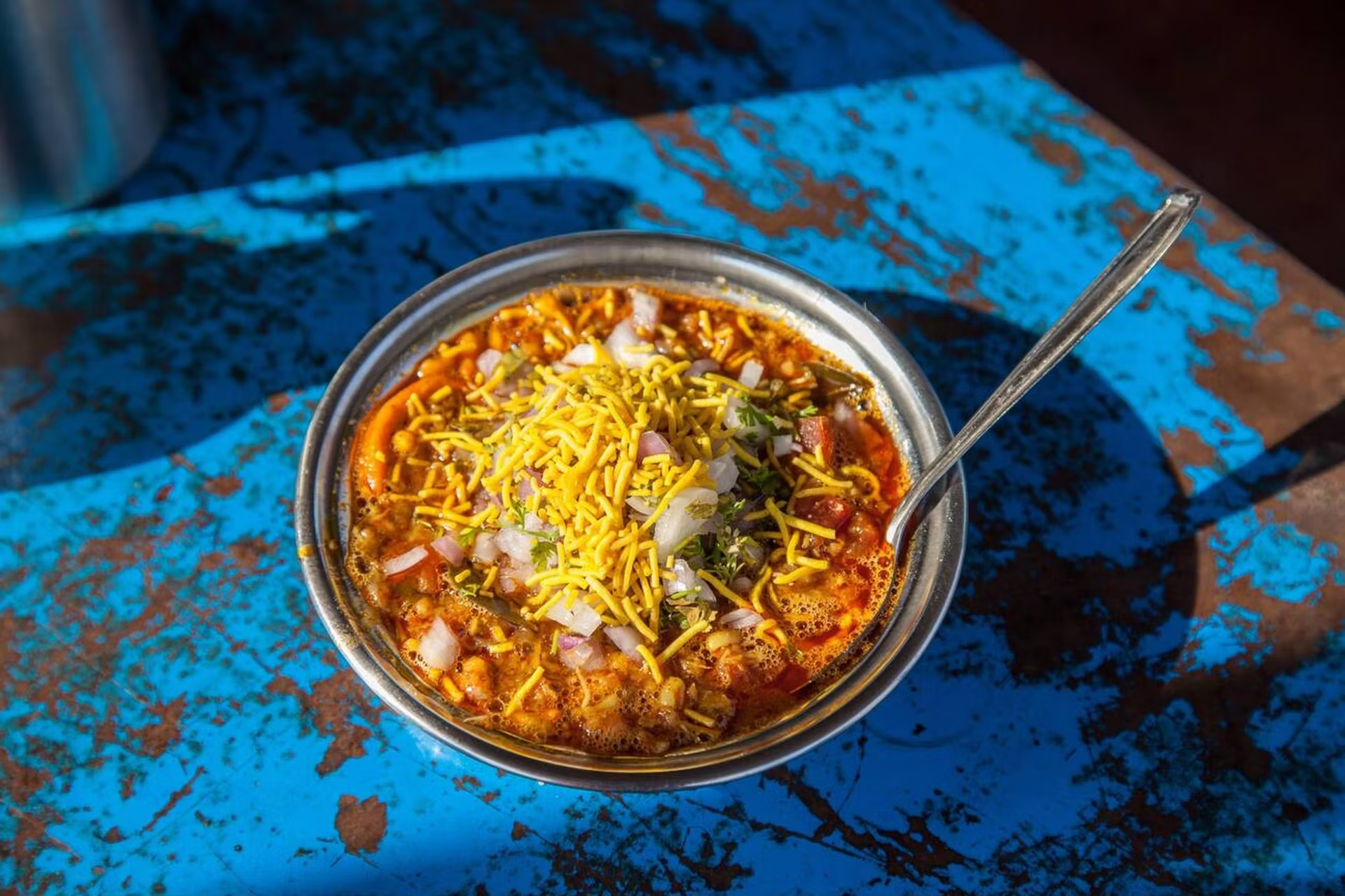
A plate of traditional misal from Nashik.
6. Krishna Vada Pav (Ashok Stambh):
For a quick snack, head to Krishna Vada Pav. Their Vadas are distinctively round (Gol) and bigger than the Mumbai version. Served with a dry garlic chutney and fried green chillies, it is the ultimate on-the-go fuel.
7. What to take home?
Don't leave the city without buying Nashik Chivda from Kondaji Chivda (near the Kapaleshwar Temple). It is a dry snack made with flattened rice (poha), fried onion, garlic and a special spice mix that makes for a perfect souvenir.
Adventure & Trekking
While the vineyards offer relaxation, the mountains surrounding Nashik offer pure adrenaline. The city sits at the foothills of the Sahyadri range, making it a prime base for some of Maharashtra's most dramatic treks.
If you are looking for trekking places near Nashik, here are the top three trails, ranging from beginner-friendly to hair-raising.
1. Harihar Fort:
Difficulty level: High/Thrilling
Time required: 3 to 4 hours (Round trip)
You have likely seen this fort on Instagram. It is famous for its iconic 80-degree vertical rock-cut steps. These narrow stairs are carved directly into the rock face and offer a climbing experience unlike any other. The initial part of the trek is a pleasant walk through fields, but the final ascent up the "scary steps" requires focus and steady nerves. There are notches cut into the rock for a firm grip.
Safety warning: While visually terrifying, it is manageable if you take your time. However, avoid this trek during heavy torrential rains if you are afraid of heights, as the steps become slippery in the waterfalls.
Best time: June to September (Monsoon) for lush greenery, or October to February for clear views.
2. Anjaneri Hills:
Difficulty level: Moderate/Endurance-based
Time required: 4 to 5 hours (Round-trip)
Mythology states this is the birthplace of Lord Hanuman. It is less about steep climbing and more about a long, scenic hike across a vast plateau. The trail is well-defined with stone steps for most of the way. As you ascend, you pass a beautiful lake shaped like a footprint (believed to be Hanuman's). The top offers a windswept plateau with panoramic views of the Trimbakeshwar range.
Insider tip: There are plenty of monkeys on this trail (fittingly). Keep your food inside your bag and avoid carrying plastic bags in your hand.
3. Brahmagiri Trek:
Difficulty level: Moderate
Time required: 4 hours
This trek takes you to the origin of the Godavari River, the second-longest river in India. The path starts right behind the Trimbakeshwar temple. It involves climbing roughly 750 concrete steps. While not technically difficult, it is a test of stamina. The route is lush and passes through thick vegetation and small waterfalls during the monsoon.
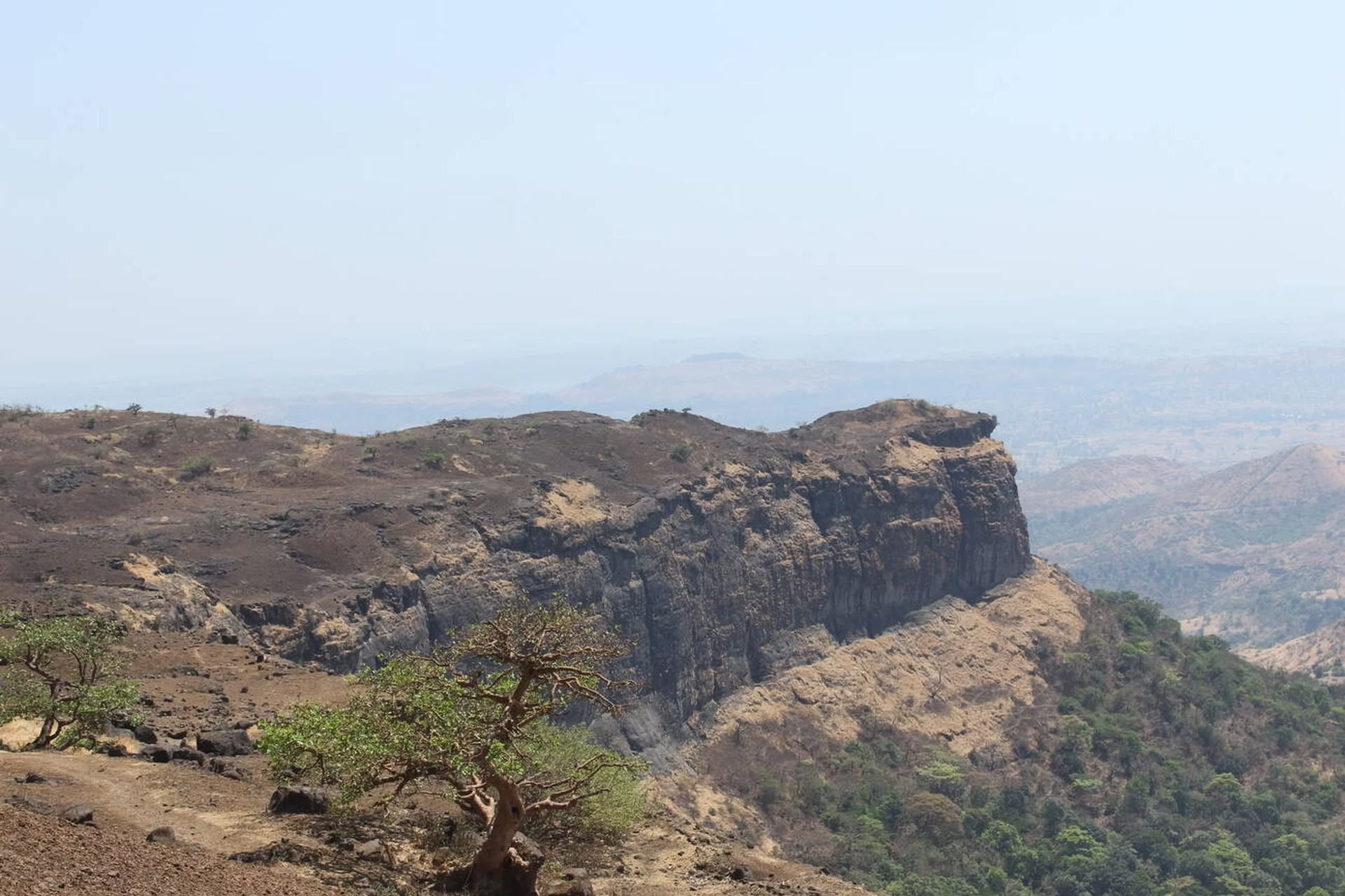
View from top of Brahmagiri hill.
4. Ramshej Fort:
Difficulty level: Easy
Time Required: 1.5 to 2 hours
If you are a beginner or travelling with kids, Ramshej is the perfect introduction to trekking in Nashik. Located just 14 km from the city on the Peth Road, this small fort has a gentle gradient. It is historically significant as it famously held out against the Mughal army for several years. The view from the top during sunset is spectacular and requires minimal effort.
The perfect 2-day Nashik itinerary
Day 1: Ancient Nashik
Morning: Start your trip at Trimbakeshwar Jyotirlinga. Arrive early to beat the queues and visit the Kushavarta Kund nearby.
Lunch: Head back to the city for a spicy Misal Pav feast at Sadhana Chulivarchi or Ambika Misal.
Afternoon: Explore the Panchavati area on foot. Visit the black stone Kalaram Temple, crawl through the Sita Gufa caves and walk along the Godavari river banks.
Evening: End the day at Ramkund to witness the peaceful Goda Aarti (river worship ceremony) at dusk, followed by a traditional Maharashtrian dinner.
Day 2: Modern Nashik
Morning: Hike up the Pandavleni Caves for a dose of history and a panoramic view of the city skyline.
Mid-Day: Drive towards the Gangapur Dam region. Make a quick pitstop at Someshwar Waterfall for photos.
Lunch & Afternoon: Head to Sula Vineyards or York Winery. Enjoy a lunch overlooking the vines, followed by a guided tour to learn about the wine-making process.
Sunset: Grab a spot at the tasting room balcony. Sip on a chilled Chenin Blanc or Sauvignon Blanc while watching the sun set behind the Gangapur Dam waters before heading home.
Where to Stay in Nashik
For travellers seeking a social atmosphere, budget-friendly rates and a prime location right in the heart of the wine belt, there is really only one standout option.
About Zostel Nashik
Located in the quiet village of Gangavarhe, Zostel Nashik is not just a hostel; it is an experience. Unlike typical city hostels tucked away in crowded alleys, this property sits right amidst the farmlands, practically sharing a fence with the vineyards.
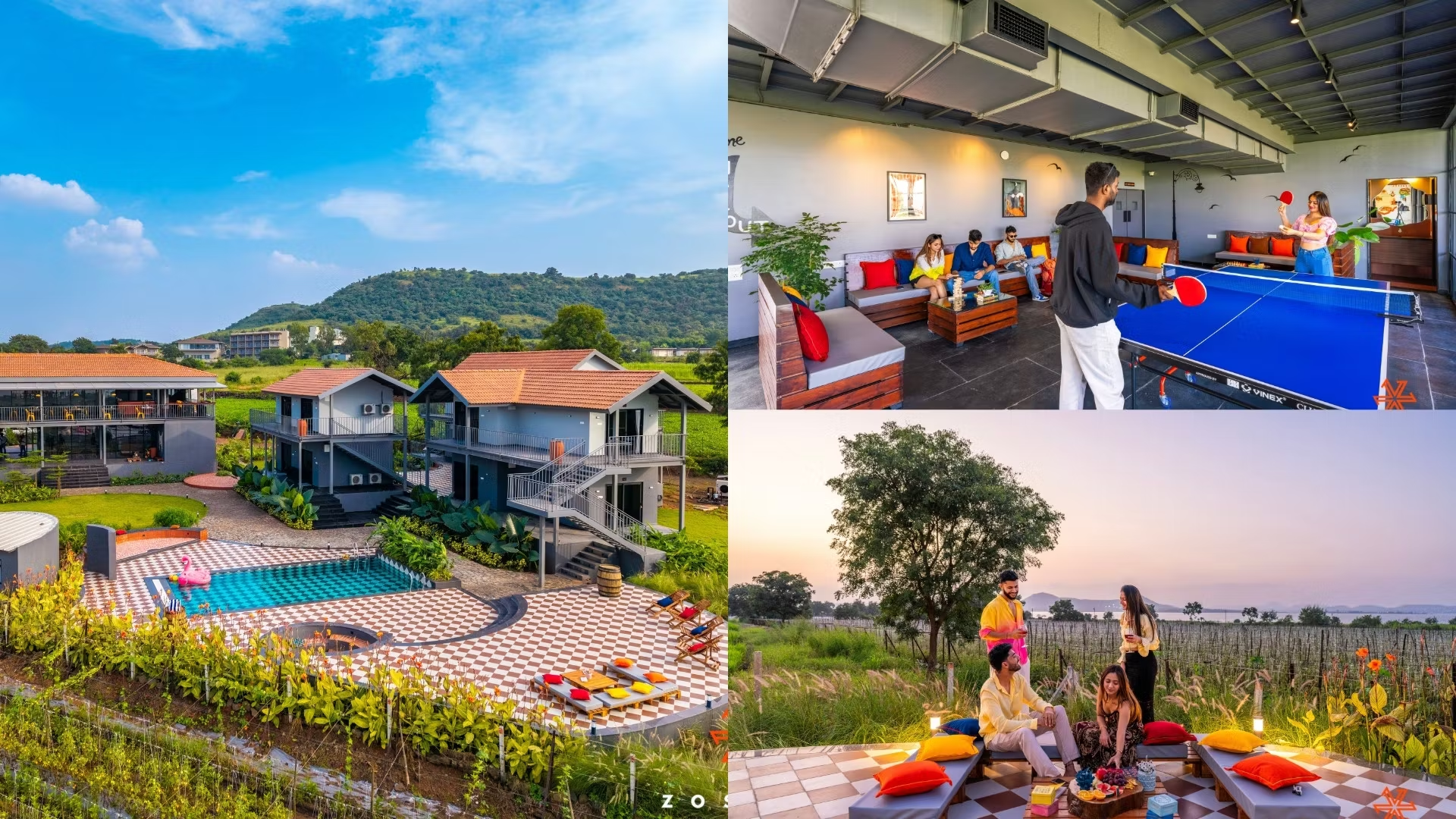
Commom areas at Zostel Nashik.
The atmosphere here is distinctly laid-back and social. The property features a central swimming pool that acts as the main gathering spot. Evenings are usually spent around the bonfire or in the common room, which is well-stocked with board games and features a pool table. It is the perfect place for solo travellers to find a group for trekking or wine tasting.
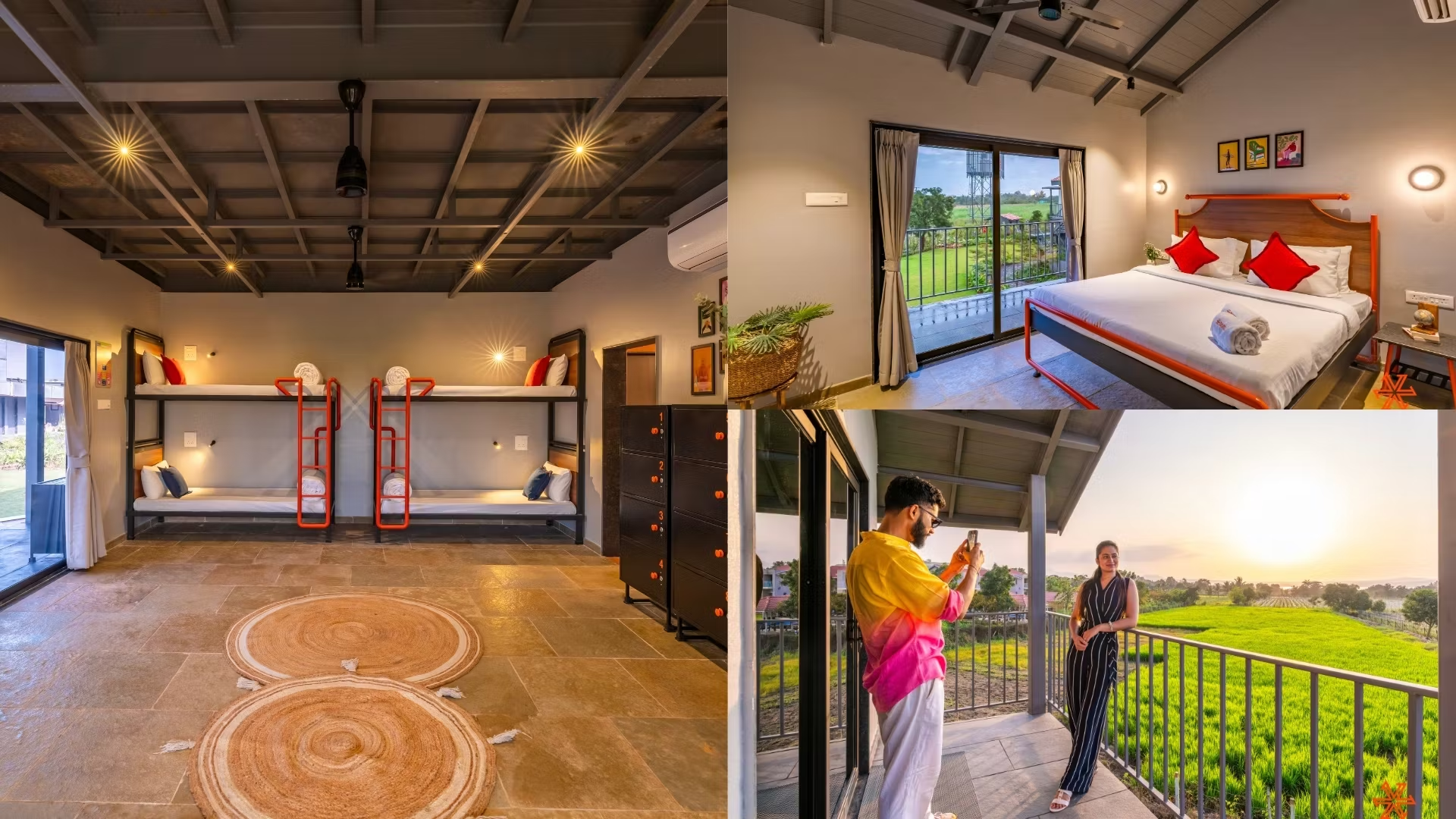
Spacious dorm and lavish private room at Zostel Nashik.
Check out Zostel Nashik.
Whether you are here to seek blessings at Trimbakeshwar or sip the finest blends in the Wine Capital of India, this city promises a journey unlike any other. We hope this Nashik travel guide helps you plan the perfect weekend getaway, packed with spicy Misal Pav, scenic treks and unforgettable memories. Safe travels!