

Why I Fell in Love with Lahaul: Villages, Treks & Traditions
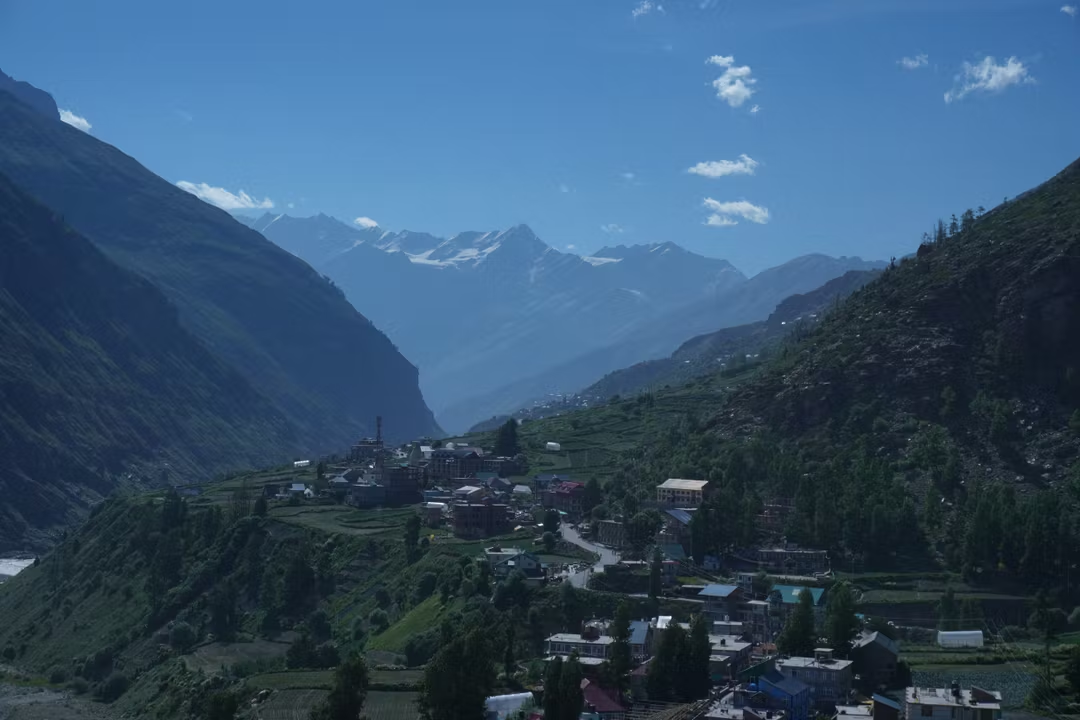
Most travellers who cross Manali keep their eyes fixed on the North end of the Atal Tunnel or the roads leading to Ladakh or Spiti, rarely wondering what lies on the other side. My recent trip took me into Lahaul’s heart, a land of raw beauty and quiet charm that feels like a secret kept from the rush of the tourist trail. If you're searching for offbeat places near Manali where mountains speak in silence and every village feels like it belongs to another century, Lahaul will steal your heart (it stole mine for sure).
The real magic begins the moment you leave Manali’s bustle and slip into the darkness of the Atal Tunnel. In just eight minutes, you emerge into an entirely different world. Gigantic mountains stand before you, their sharp ridges cutting into the sky, with hanging glaciers clinging to their slopes as if frozen mid-fall. The air feels drier, the sun brighter, and the scale of the landscape almost overwhelming. It is here that the sense of adventure truly kicks in, as though you’ve crossed a secret threshold into the Himalayas’ quieter, wilder side.
If Manali is the crowd’s favourite, Lahaul is its shy sibling. It is an offbeat village near Manali in spirit, multiplied by dozens, each with its own story, traditions and unmatched mountain backdrops.
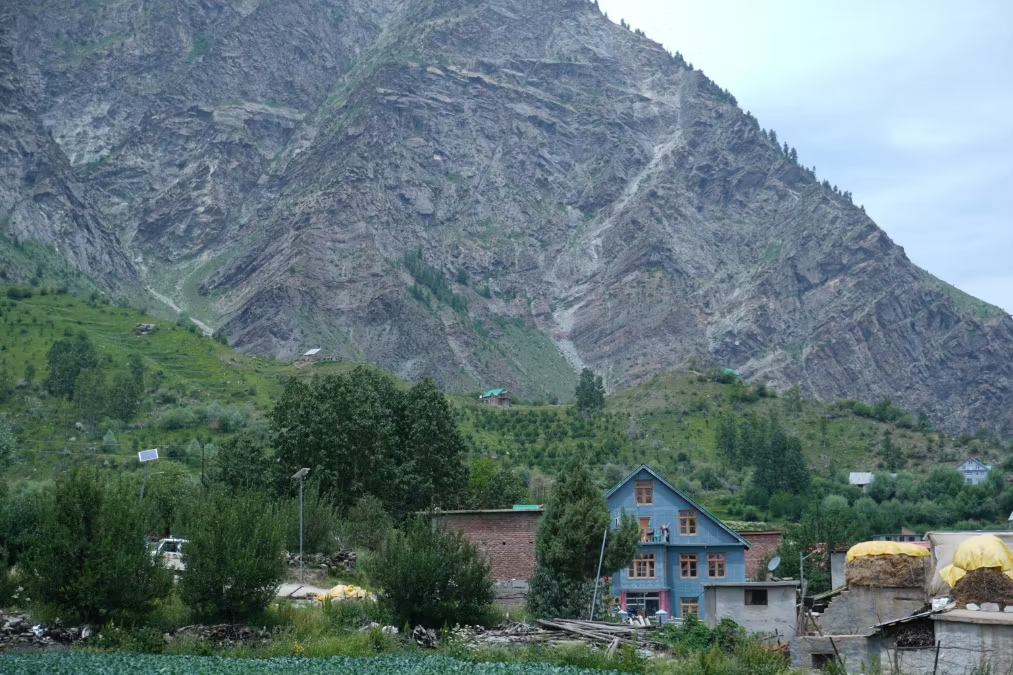
One of the last peaks of the mighty Dhauladhar range.
Reaching Lahaul
Getting to Lahaul is surprisingly easy once you are in Manali, yet the journey feels like a grand reveal. You can hop on a local bus from Manali for about INR 100, which will drop you at Sissu, or ride all the way to Keylong if you want to venture deeper into the valley. For a slightly faster and more flexible option, shared cabs are available from Manali for INR 300 to 400, filling up quickly in the mornings.
When I went to Lahaul
Lahaul changes its colours with every season, making it beautiful no matter when you arrive. Spring and early summer bring a gentle warmth, with snow still hanging on the higher slopes while the valleys begin to bloom. Pre-monsoon days are perfect for long walks and photography, with clear skies framing the peaks in crisp detail.
I visited in the pre-monsoon season and stayed right through the monsoon, which turned out to be a revelation. Unlike the Kullu Valley or other parts of Himachal, Lahaul receives very little rain, yet its farms remain lush and fruitful. Thanks to the many glaciers feeding its rivers and streams, the soil can grow almost anything, from peas to buckwheat to bright patches of mustard. Hiking during the monsoon was a joy, with cool, pleasant weather and trails softened by the occasional drizzle. Every evening ended with sunsets that painted the valley in gold and crimson, lingering long enough for you to just stand still and watch the colours fade.
Autumn transforms the farms into a patchwork of ochre and amber, while winter blankets the entire valley in snow, turning it into a frozen wonderland. Each season here tells a different story, so the best time to visit Lahaul depends on the kind of magic you are looking for.
Villages of Lahaul that I explored
Lahaul’s charm lives in its villages. Each has its own pace, shaped by the land, the weather, and the people who call it home. Some perch high with endless views, others sit quietly by glacial streams.
For those seeking offbeat places near Manali, these villages are little worlds of their own. You might find a bakery serving fresh bread in one, or colourful prayer flags over whitewashed homes in another. Each stop feels like a new story waiting to be told.
Sissu
Sissu is often the first town that greets travellers in Lahaul, and it wastes no time in showing off its beauty. Right from the roadside, you can spot its most famous landmark, a waterfall tumbling straight down from a sheer cliff, sending mist into the valley below. It is the kind of view that makes bus passengers lean out of windows and cab drivers slow down just so everyone can take it in.
But Sissu is not just a quick photo stop. The village hides a serene lake where you can paddle boats against a backdrop of jagged peaks. For those who like their adventures on foot, there is a hiking trail leading to the Sissu Monastery, which goes right behind Zostel Sissu. The path winds through some of the prettiest farms you will ever see, dotted with patches of wildflowers, stretching into rolling grasslands, and passing through quiet villages where life moves to the rhythm of the seasons.
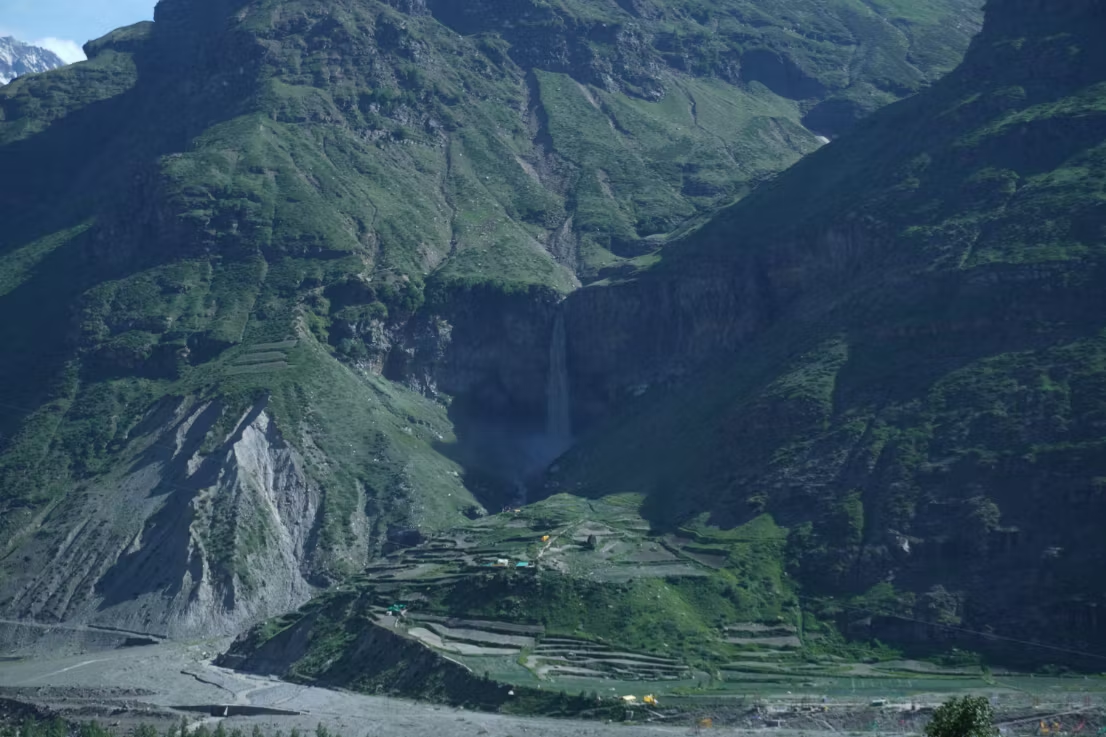
Sissu Waterfall from Sissu Monastery.
Gemur
Gemur is an offbeat village near Manali that feels almost hidden from the world. Its centrepiece is the centuries-old Gemur Monastery, where prayer flags sway against a backdrop of snow-capped peaks. The walk to the monastery passes through fields of peas and barley, with villagers often stopping for a friendly chat.
Keylong
Keylong is the bustling heart of Lahaul, a place where the quiet of the mountains meets the hum of daily life. From the moment you arrive, your eyes are drawn to the massive wall-like mountain across the valley. In winter, it turns into a sheer expanse of white, looking every bit like the frozen wall from Game of Thrones. Even in summer, its rugged face stands as an unshakable guardian over the town.
The market here is the town’s lively soul. To reach it, you descend a long flight of stairs that seems to take you into another world. At the bottom, narrow lanes bustle with vendors selling fresh vegetables, local handicrafts, and steaming momos. The smell of butter tea drifts from small cafes, where travellers and locals share stories over warm plates of food.
Jispa
Jispa feels like it was built for travellers who love waking up to views that make you pause. Sitting along the banks of the Bhaga River, it is framed by towering peaks that glow golden in the morning and turn deep purple at dusk. The sound of the river is a constant companion, gentle enough to lull you to sleep at night.
The village is small but welcoming, with a handful of homestays, campsites, and one gem of a spot for food lovers, Legendz Café. With cosy indoor seating and an inviting outdoor space overlooking the valley, it serves excellent Italian and Lahauli dishes. The coffee here is rich and comforting, and the Lahaul berry tea is a must-try for its unique, tangy-sweet flavour.
Rashil
Rashil is a quiet village tucked deep in Lahaul, surrounded by lush farms and fruit orchards that change colour with the seasons. It is here that Zostel Homes Rashil welcomes travellers, offering not just a place to stay but the warmth of a family home.
Your hosts are a sweet, affectionate family who make you feel at home from the moment you arrive. Didi cooks the most delicious food, using ingredients sourced almost entirely from their own land. Fresh vegetables, golden ghee, creamy milk, and rich butter all come from their farms, making every meal taste like it was made with love and sunshine.
The air here is clean, the views stretch across endless fields, and life moves at a pace that invites you to slow down. For anyone looking for an offbeat village near Manali where hospitality feels genuine and nature is always within reach, Rashil is a perfect choice.
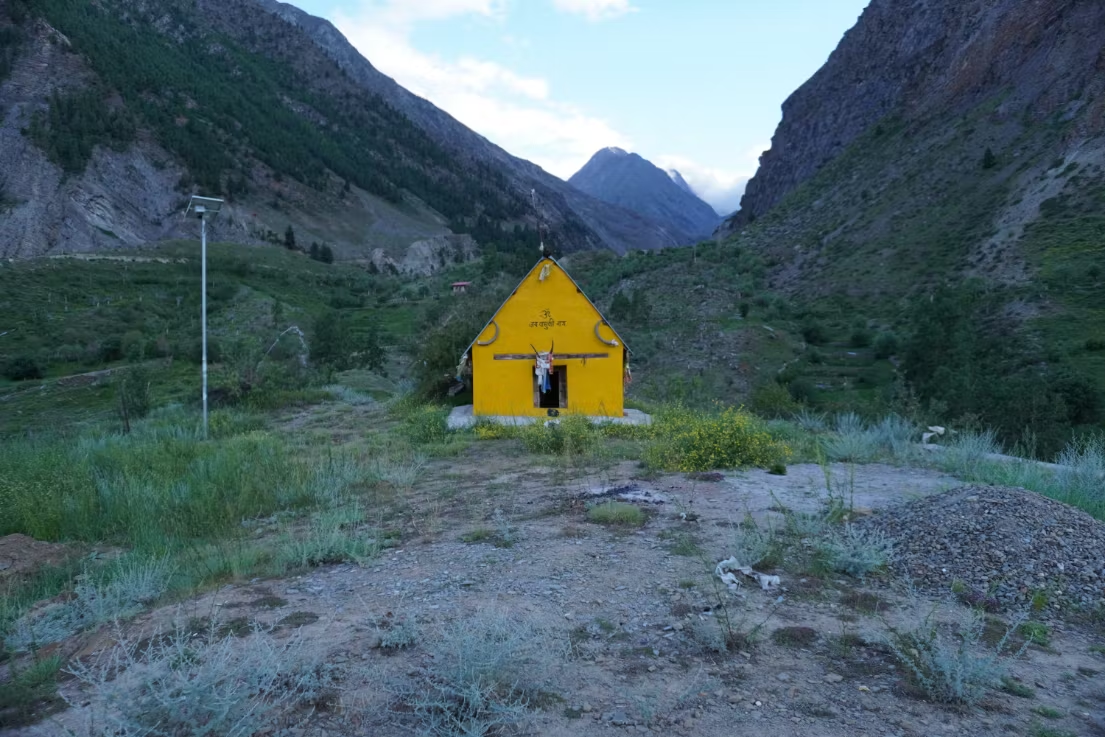
Vasuki Nath temple, sitting on a hilltop right above Rashil and Jobrang.
Jobrang
Just a short hike from Rashil lies Jobrang, a tiny sister village surrounded by emerald farms and framed by tall mountains. With only a handful of houses, it feels like a place time forgot, where the quiet is broken only by the rustle of crops in the breeze.
Between Rashil and Jobrang begins the famous Neelkanth trek, a trail that draws adventurers with promises of high-altitude views and untouched wilderness. Spending time in Jobrang before or after the trek lets you soak in the slow rhythm of village life, making it an offbeat place near Manali that still feels undiscovered.
Trilokinath
Trilokinath is one of Lahaul’s most culturally rich villages, known for its ancient white temple that is sacred to both Hindus and Buddhists. Perched on a hill, the temple offers sweeping views of the surrounding mountains and valleys, with prayer flags fluttering in the wind and bells chiming softly in the background.
The village itself is small, surrounded by terraced fields and traditional stone houses. Walking through its narrow lanes, you might meet locals carrying baskets of freshly harvested vegetables or children racing each other up the slopes. Trilokinath is more than a spiritual stop; it is a glimpse into the harmony of traditions that makes Lahaul so unique, and an offbeat place near Manali worth the journey.
The festival that made me love hiking
Every two years, the quiet village of Trilokinath comes alive with one of Lahaul’s most unique celebrations. Thousands of people from across the valley gather at the white-walled Trilokinath Temple, where the yatra to Satdhara begins. Satdhara is a sacred spot where seven crystal streams merge into one, forming a milky-white flow from its origin to the end.
The journey is a 5 km trail up the mountains, and it feels like walking through a living postcard. The path winds past lush farms, slips into cool forests, crosses rivers on wooden bridges, and scrambles over boulders before climbing into a barren, high-altitude world where nothing grows. From here, the views open to the other side of the mountain, the kind of stark, snowcapped peaks and sprawling glaciers you imagine when dreaming of the Himalayas.
Along the way, locals hand out juice, candies, chocolates, and smiles. They sing bhajans, dance, and welcome anyone to join, even strangers like me and a fellow traveller I met at Zostel Homes Rashil. At Satdhara, rituals are performed, shamans share the deity’s message, and steaming bowls of kheer are passed around. Then the feast begins, villagers offering halwa, puris, more kheer, cold drinks, and endless treats they cooked at home early in the morning. I ate so much my stomach was ready to surrender, but saying no felt impossible when every offering came with such warmth and sweetness.
It is a celebration unlike any other, where the mountains echo not just with chants and music, but with the shared joy of an entire valley.
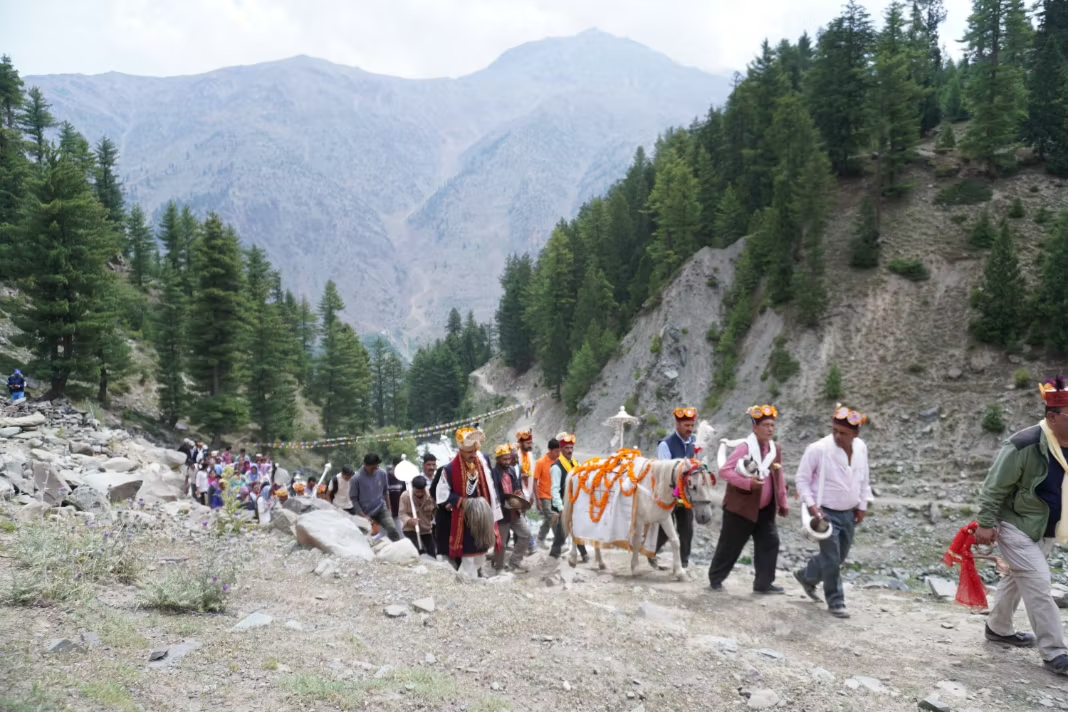
Local pilgrims hiking towards Satdhara Temple with their diety.
Festivals of Lahaul
Halda / Khogla
This is Lahaul’s own version of Diwali, celebrated in mid-January. In valleys like Gahar, it's known as Halda, while in Pattan, it's called Khogla. Homes light handcrafted cedar-wood torches (halda), and villagers gather at a central spot, each lighting theirs in honour of different deities. The resulting glow against the snowy nights is magical. Sometimes, locals even “curse” rival clans—rituals that speak of lineage and shared history.
Fagli (Kus/Kuns)
Roughly a fortnight after Halda comes Fagli, a spring festival that mixes gratitude, ritual, and community warmth. Families decorate their homes, light oil lamps, and set up a "Baraza"—a bamboo structure draped as a deity's grandmother, the bringer of prosperity. Early morning rituals include offerings like Totu (barley dough in buttermilk) and Kwari, a sweet grain offering thrown to the waiting crows. The ritual continues with blessings for livestock, elders, and extended family, a deep-rooted celebration of life's cycles.
Tsheshu Fairs
During June, vibrant fairs unfold in monasteries across Gemur, Shashur, Kardang, Kyi, and Mane. Known as Tsheshu, these gatherings are marked by elaborate devil dances, masked and costumed, performed by lamas in rhythmic, ancient tradition. It’s a dramatic and spiritual spectacle, a ritual of myth and protection.
Losar
Celebrated by the Buddhist communities of Lahaul and Spiti, Losar marks the Tibetan New Year. Usually in February–March, it spans several days and features ritual dances (Chhaam), masked performances, prayer, and communal feasting, filled with spiritual imagery and festive joy.
Pauri Fair
Held every third week of August, the Pauri Fair combines pilgrimage, prayer, and festivity. Devotees flock to Trilokinath Temple, perform three or seven clockwise circumambulations, while spinning prayer wheels and chanting Om Mani Padme Hum. Lamps fueled by ghee or mustard oil burn continuously. As evening falls, folk songs fill the air and the Thakur of Trilokinath leads a procession on a decorated horse. It’s a tableau of devotion, music, and community spirit.
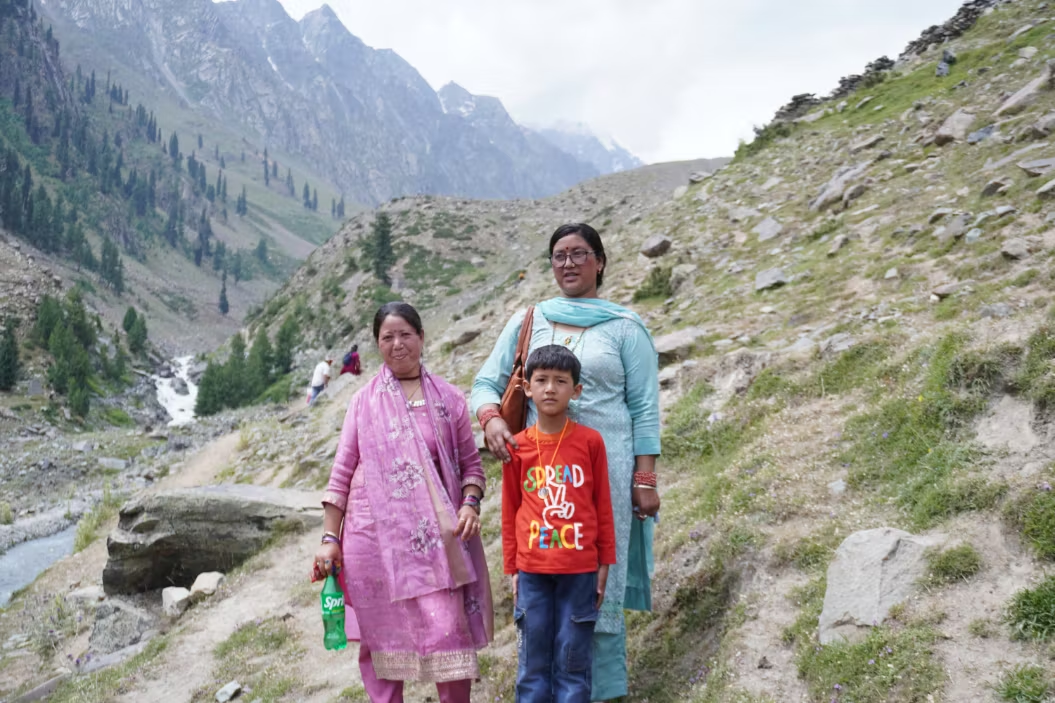
Didi who offered me frooti on Satdhara yatra.
Things you should definitely eat in Lahaul
Thukpa & Thenthuk
Soul-warming noodle soups with vegetables or meat—perfect for the chilly weather.
Chilra
A local version of dosa/pancake made of fermented buckwheat flour, usually eaten with ghee, honey, or chutney.
Tingmo
Soft, fluffy steamed Tibetan bread that pairs beautifully with spicy curries.
Dham (during festivals)
A festive platter served on special occasions, rice, dal, rajma, curd, and sweetened rice cooked with pure desi ghee.
Buckwheat Dishes
Since buckwheat (kuttu/fafda) grows widely here, you’ll find it in rotis, pancakes, and even sweets.
Local Rajma & Pulses
Lahaul’s rajma is famous for its small size and rich flavour, often cooked simply with local spices.
Home-made Butter & Ghee
Almost every household churns its own, served with rotis, parathas, or even just on plain rice.
Yak Cheese & Butter Tea
Tibetan influence shines here. Butter tea (salted, with yak butter) may take getting used to, but it keeps you warm.
Apricot & Apple Products
From jams and chutneys to dried fruit, the orchards of Lahaul make their way straight to your plate.
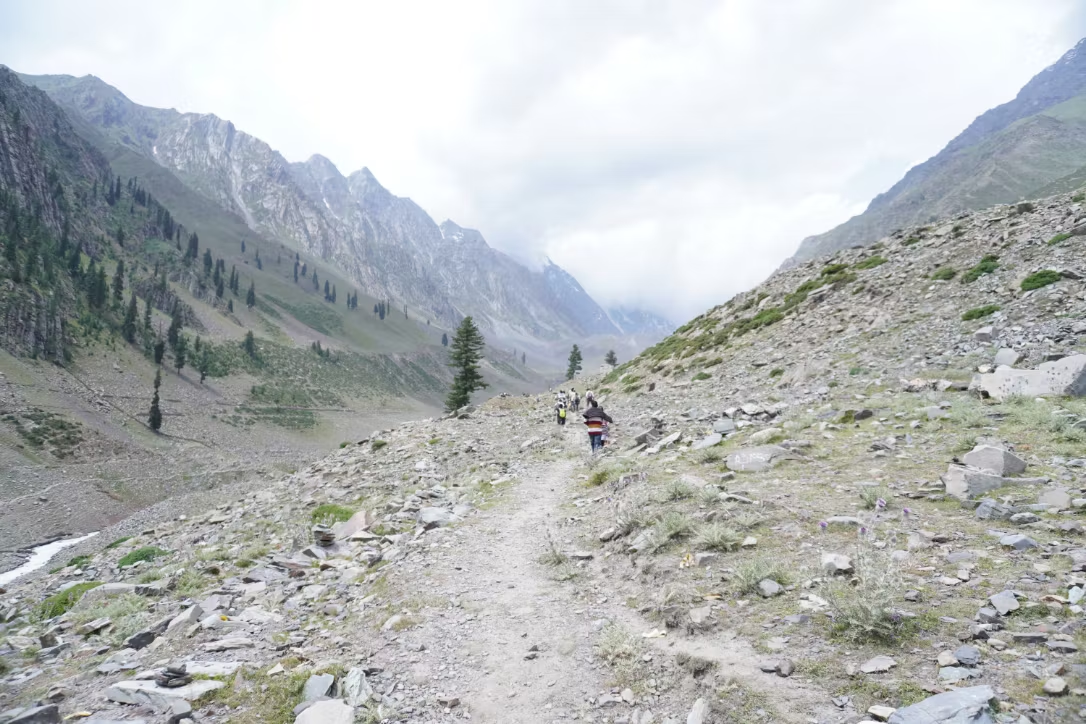
Somewhere in the middle of Dhauladhar and Zanskar mountain ranges.
If Spiti is rugged and Ladakh is vast, Lahaul is where silence finds a voice. It’s still raw, still real, still waiting for those who choose slow travel over hurried itineraries. Come here not just to see, but to stay a little longer, listen a little deeper, and live a little freer.