

Exploring Zanskar Valley: A Guide to the Road Less Taken
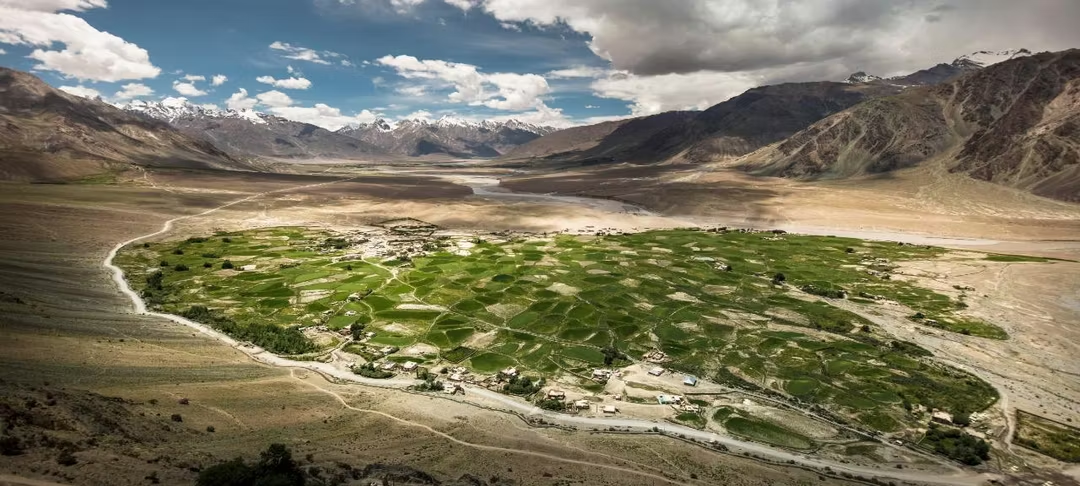
Cushioned deep within the rocky folds of the Indian Himalayas is Zanskar, a remote valley in India, untouched by the rush of modernity and blessed with the enchantment of nature. Snow-capped peaks, cerulean skies, rugged terrain, and glistening turquoise waters come together to paint its canvas. Often missed out by most who travel to Ladakh, Zanskar offers a dreamy landscape during summers and looks no less than the world of Narnia during winters, setting the stage for the famous & challenging Chadar Trek – where one gets to walk on the frozen Zanskar river. For those seeking high-altitude thrills, the formidable Shinku La pass provides breathtaking vistas.
Yet, amidst this rugged beauty, the warmth of the people of Zanskar, with their traditions—a blend of Tibetan and Ladakhi influences—captures the heart.
In this Zanskar travel guide, we’ll dive into all that you need to know about this destination.
Best Time to Visit Zanskar Valley
Planning a trip to Zanskar Valley involves careful consideration of seasons. The region's high altitude and terrain mean significant variations in the weather conditions throughout the year. The ideal time to explore this hilly paradise is from June to September. During this period, the skies are clear, and the temperature fluctuates from slightly warm to pleasant. The winter snow has melted by this time, opening up the mountain passes (read Shinku La) and making the region accessible.
With the gradual advent of winter and the slow settlement of snow, the months from October to December are October are ideal for travellers who relish the crisp mornings that slowly yield to frosty evenings. Come January-April, the Valley becomes inaccessible due to heavy snowfall, and all the roads are blocked off. However, the place attracts a small crowd of trekking enthusiasts even during this period.
About Zo Trips to Zanskar
Zo Trips by Zostel offers an immersive journey through the heart of Zanskar, allowing travellers to experience the region's diverse landscapes, thrilling adventures, and culture. From the familiar streets of Manali to some of Zanskar's most captivating villages like Purne and Karsha, landmarks like Padum Monastery, Gonbo Rangan, Zangla Palace and more. Whether you're drawn to architectural marvels, outdoor adventures, or simply soaking in the serene atmosphere of remote Himalayan villages, the trip is aimed at providing a well-rounded taste of this remarkable region.
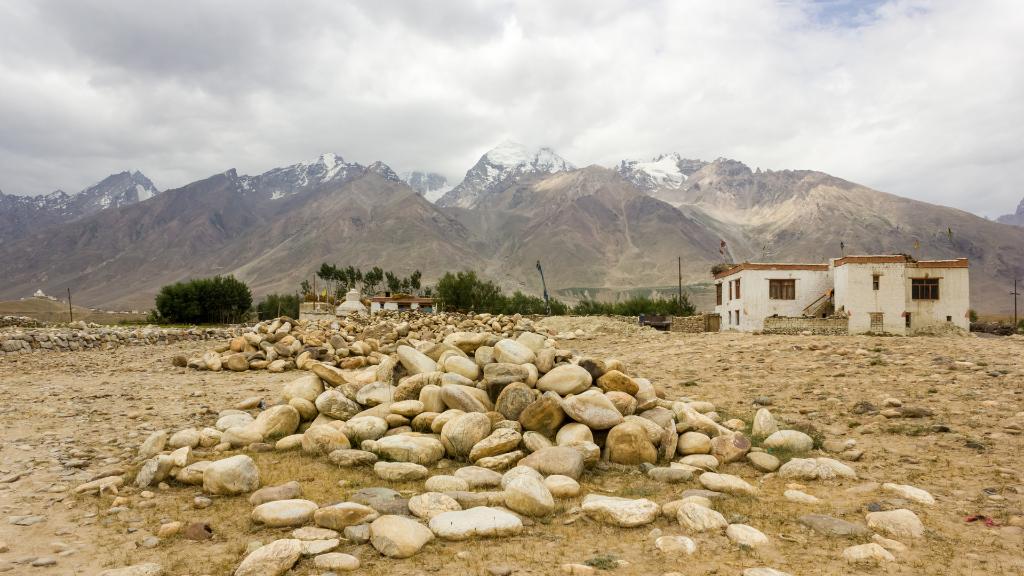
Padum: An oasis of civilisation amidst Zanskar's wilderness.
How to Reach Zanskar Valley
Reaching Zanskar is an adventure in itself, involving a combination of several modes of transportation and a lot of patience. The journey, however, rewards with breathtaking landscapes.
Air: If you want to travel from Manali, then the nearest airport is Bhuntar Airport, located 231 km away, and if you’re travelling from Leh, then Kushok Bakula Airport is 460 km away. If travelling from Srinagar, the nearest airport is Sheikh-ul-Alam airport in Srinagar, at a distance of 470 km. You can take a bus or cab to Kargil and then another bus or cab to Zanskar Valley from the airports.
Train: Zanskar Valley has no connectivity to railway lines, and the nearest railway station is located 700 km away in Jammu Tawi. From there, you can take a cab or bus to Kargil, followed by another cab or bus to reach Zanskar.
Road: Reaching the mystical Zanskar Valley has always been an adventure in itself, but recent developments have made it slightly more accessible. The earlier route spanning nearly 250 km used to be Kargil – Sankoo – Panikhar – Parkachik – Rangdum – Padum and used to take 2 days. While this route always remains an option, the 2 new road routes are-
- The first new road connects Leh to Padum via Lingshed, allowing travellers to bypass the long detour to Kargil. This route, though challenging with stretches of off-road dirt tracks, offers the possibility of reaching Padum from Leh in a single day if you embark early and traverse the breathtaking Sir Sir La and Singe La passes.
- Another exciting option is the Manali-Zanskar route. This route, perfect for those coming from Himachal Pradesh, connects Lahaul Valley to Zanskar through the dramatic Shinku La Pass. Expect a similar but more isolated landscape compared to the Manali to Leh route. Be prepared for a night's stay as the distance from Manali to Padum is around 270 km, with a dirt track replacing proper roads beyond Darcha.
To reach Zanskar from Srinagar, you’ll traverse the scenic Sonmarg and Drass to reach Kargil, and then you can take any of the above-mentioned routes from Kargil to Padum.
You can take these routes to reach Zanskar by bus, bike or car.
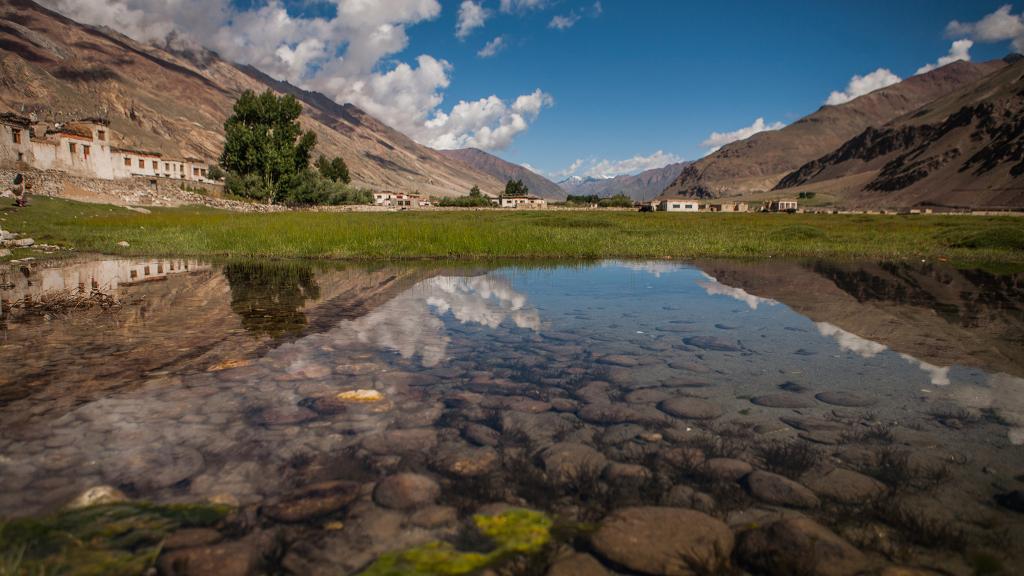
Sani Lake: A serene mirror reflecting the majesty of surrounding mountains.
Acclimatisation in Zanskar Valley
Gearing up for Zanskar? This amazing valley is high up in the Himalayas (around 13,154 ft), so listen to your body and take a breather (or two) for 2-3 days. Acclimatisation is like giving your body a jetpack to adjust to the thinner air. Pay close attention to how you feel. Headaches, dizziness, and shortness of breath can be signs of Acute Mountain Sickness (AMS). If you experience these, rest immediately and descend if necessary. Consult your doctor beforehand, especially if you have pre-existing heart or breathing problems.
Don't jump straight into hikes— take it slow the first few days. Think gentle strolls, sipping yummy yak butter tea (a local speciality), and soaking up the mountain views.
Your body will thank you for it, and you'll be ready to conquer those Zanskar adventures!
Places to Visit in Zanskar Valley
Padum: Serving as the administrative centre, Padum is the heart of Zanskar. With a wide range of restaurants and accommodation options, it’s a hub for travellers. This quaint town offers stunning views of the surrounding mountains, and places to shop from and is home to Pibting, Karsha and Stagrimo Monastery.
Gongbo Rangan: Often referred to as the ‘lonely mountain,’ Gongbo Rangan is a stand-alone tall mountain in the Lungnak Valley of Zanskar. The local Buddhist community reveres it as a sacred site, and it provides stunning views of the surrounding landscapes.
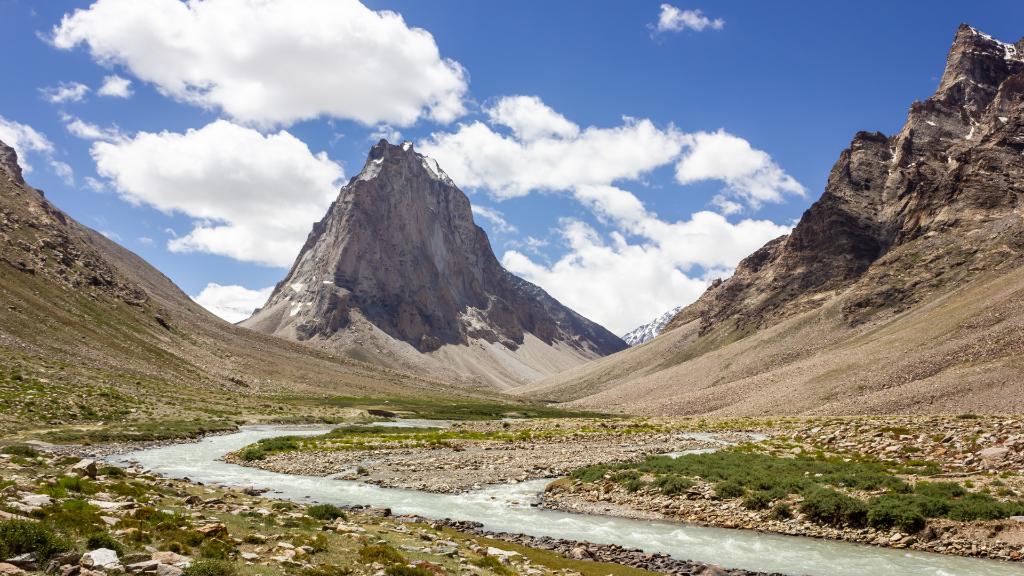
Gongbo Rangan: Zanskar's mighty stand-alone mountain
Zangla Palace: Perched atop a hillock, the palace is surrounded by the ruins of a few stupas. Located in the Zangla village, where the royal family resides, the view from the palace will stay etched in your memories forever. You can chat with the locals in the village and enjoy a cup of butter tea as well.
Phuktal Monastery: Built along natural caves, this is renowned as one of the World’s oldest and most remote monasteries. One has to travel on a dirt path from Padum to Purne and then take a 3-hour long, breathtakingly beautiful trek to reach here.
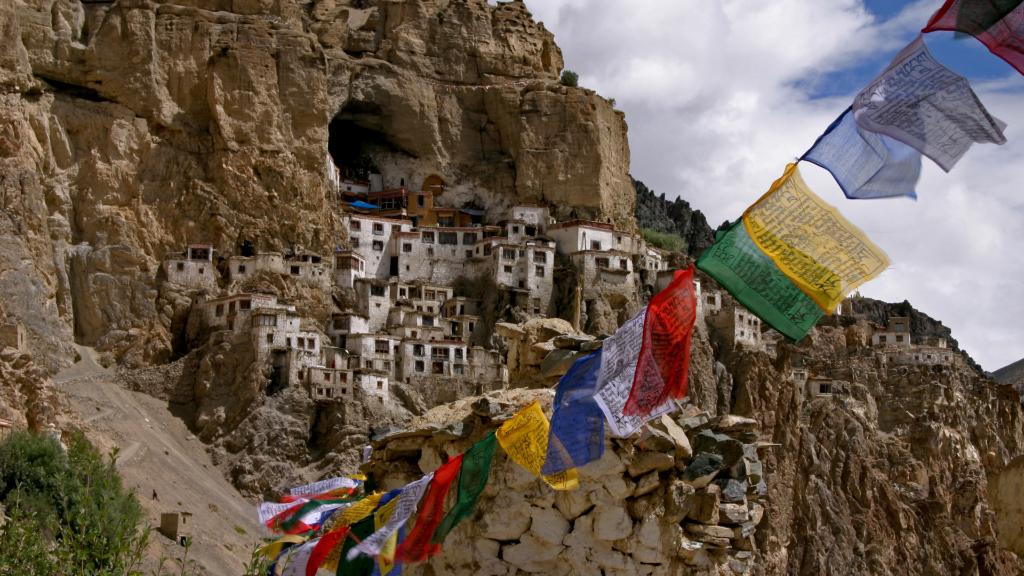
Stongdey Monastery: Sitting on top of a mountain, Stongdey Monastery is adorned with wall paintings, has 7 temples and plays host to the famous Gustor festival.
Sheela waterfall: Located in Sheela village, 4.5 km from Padum, this tall waterfall is a treat for your eyes. The crystal-clear water falls from the top of a mountain rock into a small pond and provides a great photo background.
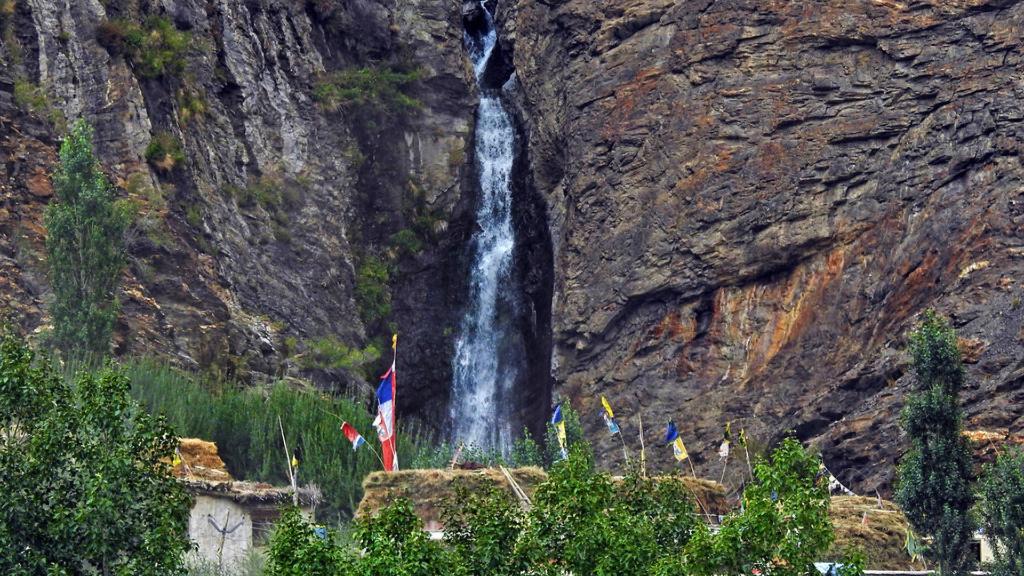
Sheela Waterfall: A ribbon of silver cutting through the rugged terrain
Sani Lake: Adorned with fluttering prayer flags, a statue of Guru Rinpoche right in the middle of the lake, serene surroundings and ample camping space, this lake in Sani village is a must-visit on a trip to Zanskar.
Treks in Zanskar Valley
Trekking in Zanskar is a dream come true for adventure enthusiasts, offering some of the most thrilling and scenic trails in the Himalayas.
Chadar Frozen Trek: Known as one of the World’s most iconic and difficult treks, this trek involves walking on a thin ice sheet of frozen Zanskar River with temperatures reaching as low as -30 degrees Celsius. It usually starts from Leh and takes 7-10 days to complete.
Best Time: January-February
Difficulty: Challenging
Markha Valley Trek: Markha is a beautiful river valley in the Hemis National Park. The trek involves crossing rivers, high passes of Kongmaru La, and rocky terrains. You’ll be awarded with picturesque views and a variety of wildlife. There are three different starting points for this trek: Stok, Spituk, and Chilling.
Best Time: June-September
Difficulty: Moderate
Drang Drung Glacier Trek: Situated near Pensi La, Drang Drung Glacier is the 2nd largest glacier in Ladakh after Siachen and provides unparalleled panoramic views. It can be reached by a 3-day trek from Padum and a 1-day trek from Pensi La, and it should definitely be on your list of things to do in Zanskar.
Best Time: July-September
Difficulty: Challenging
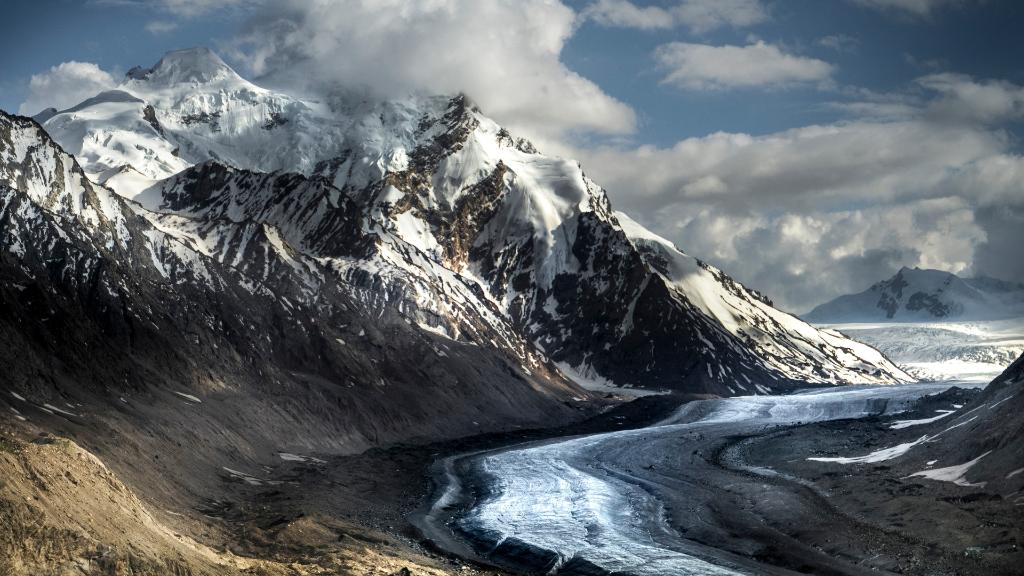
Drang Drung Trek: A challenging journey across Zansar's glacial crown.
Mobile Networks in Zanskar Valley
Staying connected in Zanskar is no longer as difficult as it used to be. However, you still cannot use prepaid SIM cards, so make sure to get a postpaid connection before travelling. Jio and Airtel launched their services here recently, so you now get to choose between BSNL, Jio, Airtel, and MTNL.
Despite all this, there are chances that sometimes, unlike your usual signal bars, you might see just a lonely one or two. Nothing to worry about. You can download offline maps to help you in navigation in such cases.
Zanskar Valley is a place that defies description. From rubbing shoulders with locals and fellow nomads to exploring ancient monasteries and palaces, every experience here feels like stepping through a portal into another era. You can join Zo Trips on their next batch to Zanskar too. So pack your sense of adventure (and some sturdy boots) because this hidden gem is about to blow your mind.